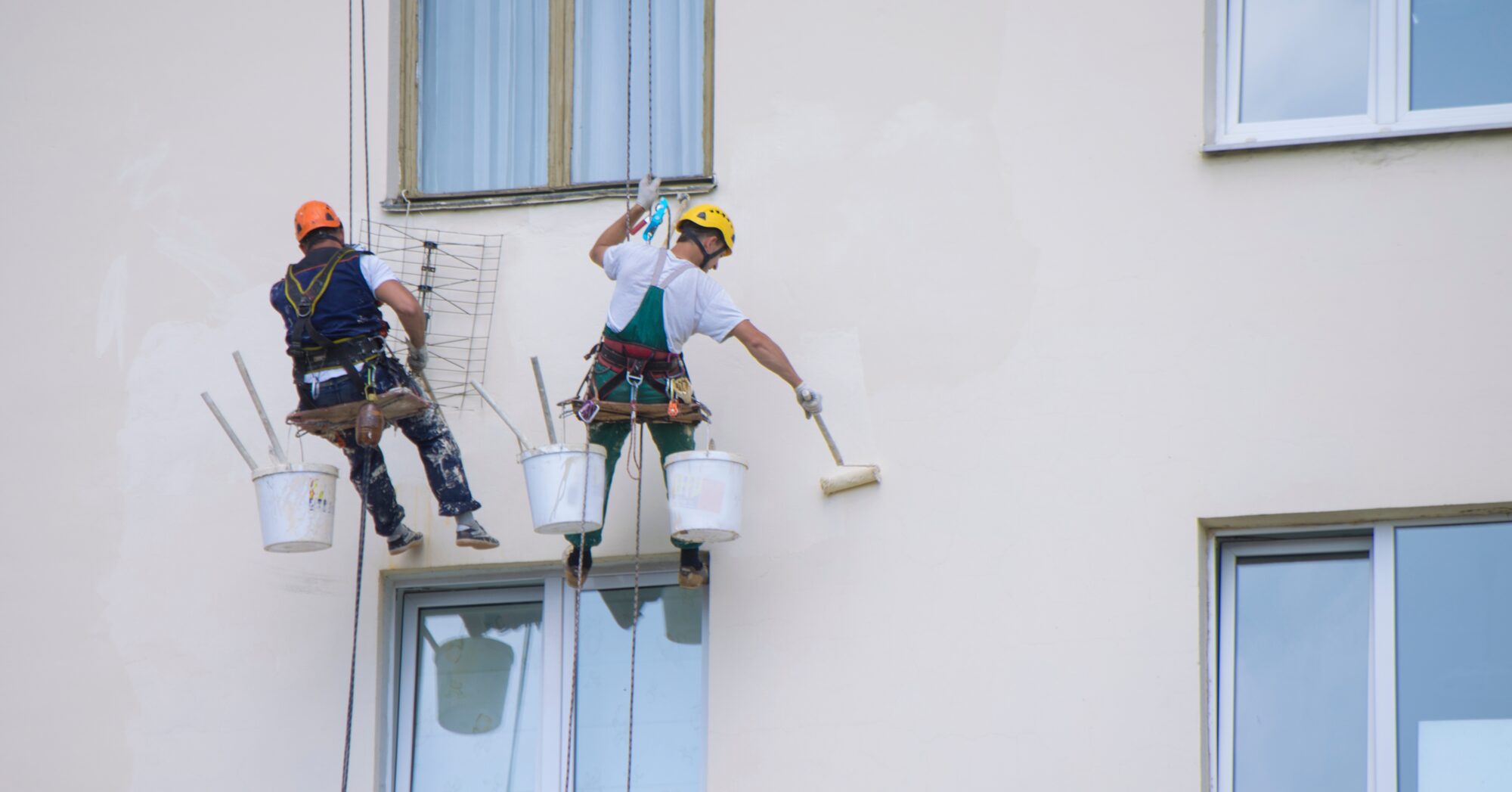
Ten years of salt wind have done to a block of twenty-four flats in Corralejo what they do to every building on this coast: the paint has chalked, rust is bleeding from the balcony edges and two cracks run down the south wall. The president has three quotes on the table. One owner wants to take the chance to change the cream for white, another glazed his terrace last year without asking anyone, and a third says he will not pay for a wall he never looks at. Each of them is asking a different legal question. This note takes them in order: whose the façade is, when repairing it is a duty, what a change of colour needs, how the bill is split, what the town hall asks before the scaffolding goes up and what changes near the shore.
The façade is everyone's, and so is the way it looks
The Civil Code lists the façade among the common elements, and it is careful about how far that goes: las fachadas, con los revestimientos exteriores de terrazas, balcones y ventanas, incluyendo su imagen o configuración, the façades, with the outer coverings of terraces, balconies and windows, including their image or configuration (article 396). The balcony is yours to use. Its outer face, its colour and its outline belong to the building.
The Horizontal Property Act draws the consequence. An owner may alter things inside his own flat as long as he does not touch the building's safety, structure or outer appearance, and beyond his door the rule is short: En el resto del inmueble no podrá realizar alteración alguna, in the rest of the building he may make no alteration at all (Ley 49/1960, article 7.1). That covers the glazed terrace, the awning in another colour, the air-conditioning unit hung on the street wall and the balcony repainted to the owner's taste. A meeting that approves such things afterwards does not always save them: in 2025 the Alicante court of appeal confirmed the annulment of a resolution that ratified two houses painted brown in a development that kept white as its common look, because it served those two owners and not the community (judgment 494/2025, of 20 October 2025).
Repairing and repainting is a duty
Whether to repair a façade that is failing is not put to the vote. The Act says that the works needed to maintain the building and meet the duty of conservation, including what is needed for safety, habitability and decorum, Tendrán carácter obligatorio y no requerirán de acuerdo previo de la Junta de propietarios, are obligatory and need no prior resolution of the owners' meeting (article 10.1). The meeting still has a job, and the Act limits it: the owners pay, limitándose el acuerdo de la Junta a la distribución de la derrama pertinente y a la determinación de los términos de su abono, the meeting's resolution being confined to distributing the levy and fixing the terms of its payment (article 10.2). Choosing the contractor and the calendar is ordinary business, decided by a simple majority.
The duty does not come from the community's own rules. It comes from the land law, which obliges every owner of a building to Conservarlos en las condiciones legales de seguridad, salubridad, accesibilidad universal, ornato, keep them in the legal conditions of safety, health, universal accessibility and decorum (Real Decreto Legislativo 7/2015, article 15). In the Canaries the town hall enforces it with execution orders, and an order that is ignored allows it to do the works itself at the owners' expense or to resort to the Imposición de hasta diez multas coercitivas con periodicidad mínima mensual, por valor máximo, cada una de ellas, del 10% del coste estimado de las obras ordenadas, the imposition of up to ten coercive fines, no more often than monthly, each of up to 10 per cent of the estimated cost of the works ordered (Ley 4/2017 of the Canary Islands, article 272). Owners who block or delay an order without good reason answer personally for the fines that follow (Ley 49/1960, article 10.2).
The technical inspection that can trigger such an order is the subject of our note on building health and the ITE, and the works that make a building accessible have a regime and a cap of their own, set out in our note on accessibility works.
Changing the colour or the finish
Repainting in the same colour is conservation. A different colour, a new cladding or a change of railings is a decision, and the Act has no rule written for colour. Three of its rules can apply.
- The statutes fix the look. Where the community's statutes or its title deed set a colour or a design, changing it means changing that rule, and that takes the unanimity of all the owners (article 17.6).
- The change alters a common element. Three-fifths of the owners and of the quotas are needed for cualquier otra alteración de la estructura o fábrica del edificio, incluyendo el cerramiento de las terrazas o la modificación de las cosas comunes, any other alteration of the structure or fabric of the building, including the enclosure of terraces or the modification of common things (article 17.4).
- Everything else. A majority of owners and quotas, and at the second call a majority of those present (article 17.7).
Where a new shade falls among the three was decided in a case from Marbella. A community changed its buildings from an ochre to an off-white by majority, and some owners claimed that unanimity was required. The Málaga court of appeal found that the statutes fixed colours for awnings and parasols but not for the façade, that the new tone was similar and applied to every building, and that unanimity was therefore not required, so that pueda adoptarse el acuerdo mediante el sistema de simple mayoría, the resolution can be adopted by simple majority (judgment 289/2023, of 8 May 2023). The ruling is about a similar tone and silent statutes. A new material or a different design is closer to the second rule, and when the owners disagree about which kind of works they are voting on, the Act lets the meeting decide and allows any of them to ask for arbitration or a technical opinion (article 17.10).
Who pays, and how the bill is split
Each owner pays by quota, the percentage his flat has in the title deed, whatever he sees from his windows, unless the title deed or the statutes set another key. Part of the bill can come from the reserve fund, which exists for conservation and repair works and which en ningún caso podrá ser inferior al 10 por ciento de su último presupuesto ordinario, may in no case be less than 10 per cent of the community's last ordinary budget (article 9.1). The rest is a levy, a derrama. How quotas, levies and arrears work is in our note on community fees and derramas.
Take the Corralejo building. The chosen quote is 62,000 euros: repair of the cracks and of the rusting balcony edges, a primer made for sea air, two coats and the scaffolding. The works carry IGIC at the general rate of 7 per cent, which is 4,340 euros, because the zero rate that the Canary tax text gives to works on dwellings is reserved for protected housing (Decreto Legislativo 1/2025, articles 32 and 38). The total is 66,340 euros. The meeting takes 10,000 from the reserve fund and splits the remaining 56,340 by quota, payable in six monthly instalments. The figures are invented to show the method.
| Flat and quota |
Share of the 56,340 euros |
| Ground-floor flat, 3.2 per cent |
1,802.88 euros |
| Standard flat, 4 per cent |
2,253.60 euros |
| Penthouse with terrace, 5.5 per cent |
3,098.70 euros |
| Commercial unit, 8 per cent |
4,507.20 euros |
For the standard flat that is 375.60 euros a month for six months. The owner of the ground-floor flat who never looks at the south wall pays his 3.2 per cent like everyone else. How a levy for works is voted and what warranty to demand from the contractor is in our note on re-waterproofing the roof and terraces.
What the town hall asks
The Canary land Act sorts works into those that need a licence, those that need only a prior notice, the comunicación previa, and those that need nothing. A façade job usually touches three of its rules.
- Repair and repainting. A prior notice is enough for conservation and restoration works and for exterior works on buildings that are not listed (Ley 4/2017, article 332). It has to be filed quince días antes, como mínimo, del inicio de la obra, at least fifteen days before the works begin, and the end of the works has to be notified as well (article 350).
- A new façade. A licence is needed for the modificación general de la fachada o el acristalamiento de terrazas existentes afectante al conjunto de la fachada, the general modification of the façade or the glazing of existing terraces affecting the façade as a whole (article 330), and for any work on a listed building.
- Scaffolding. It goes with the prior notice salvo que apoyen sobre la calzada o cuando la ocupación sobre la acera no permita un paso libre de 1,20 metros, unless it rests on the carriageway or its footprint on the pavement does not leave a clear passage of 1.20 metres (article 332). In those two cases it needs a licence (article 330).
Each town hall adds its own forms and fees, and we name only the two whose texts we have read. Puerto del Rosario approved in 2024 an ordinance on the documents that go with a prior notice for works in existing buildings: conservation and maintenance are left out of it, and works that go further need a technical report signed by a qualified professional. La Oliva's fee ordinance lists exterior works that do not substantially change the composition or materials of the façade, painting among them, as works that are simply communicated, except where scaffolding is needed. In Antigua and Pájara the question to put to the town hall is the same: which form, which fee, and what it wants for the scaffolding.
By the sea: the Costas declaration
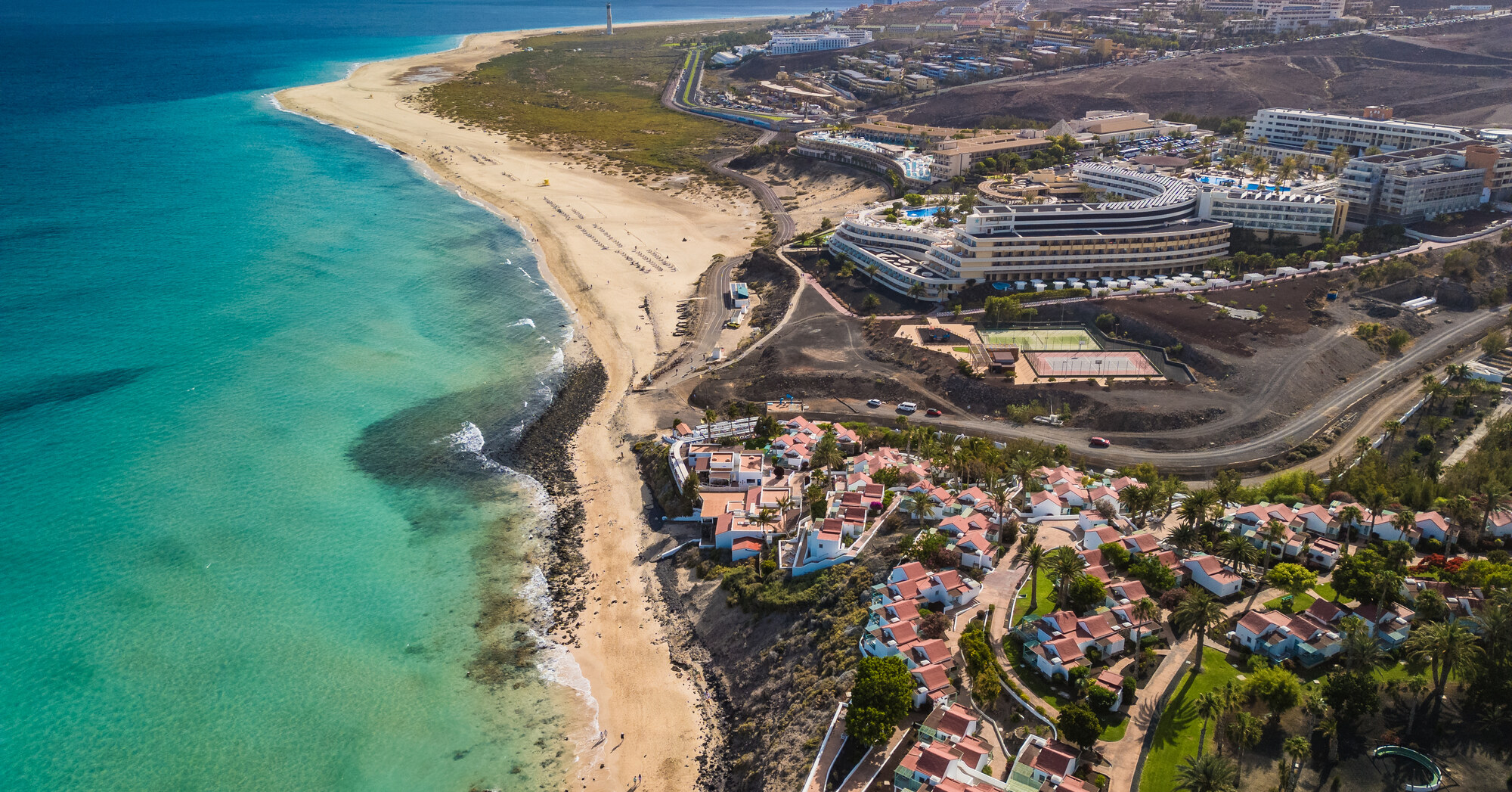
Many buildings on this island stand inside the protection strip of the Coasts Act, which measures 100 metres inland from the shore and 20 metres on land that was already classified as urban when the Act came into force in 1988 (Ley 22/1988, article 23 and third transitional provision). Buildings that stood there lawfully before the Act may be repaired, improved and modernised siempre que no impliquen aumento de volumen, altura ni superficie de las construcciones existentes, provided the works do not increase the volume, height or surface of the existing constructions (fourth transitional provision). The town hall cannot clear them until the owners show that they have filed a responsible declaration to that effect with the regional administration. For a repaint the declaration is short, and it comes before the prior notice.
What the contract should fix
A façade contract fails in the same places every time, and each can be settled on paper before the first day.
- The scope. The surfaces measured, the repairs counted, the product named, and a price for what turns up once the old paint is off.
- The access. Scaffolding or rope work, who files the prior notice and who pays the town hall's fees.
- The preparation. On this coast the paint lasts as long as what is underneath: rust removed and treated, cracks opened and sealed, a primer suited to sea air.
- The colour. The reference approved by the meeting, written in the minutes and in the contract.
What we do in the communities we administer
In the communities we administer, works reach the meeting with three quotes on the table, compared line by line, and our fee is a fixed fee per unit, never a percentage of the works and never a commission from a supplier. The service is described on our community administration page, and you can ask for a quote for your community.
Common questions
Does repainting the façade need a vote?
Not the decision to repair: conservation is obligatory. The meeting distributes the levy and fixes how it is paid, and it chooses the contractor by simple majority.
Can the community change the colour?
Yes, and the majority depends on its own rules. If the statutes fix the colour, changing them takes unanimity. If they are silent and the new tone is similar, a court has accepted a simple majority. A new material or design points to three-fifths, as an alteration of a common element.
May I paint my own balcony or put up an awning?
Not on your own. The outer face of terraces and balconies, including the way it looks, is a common element, and outside your flat you may alter nothing without the community.
Do we need a licence to repaint?
No. In the Canaries a prior notice filed at least fifteen days before the start is enough for repair and repainting. A licence is needed for a general change of the façade, for a listed building and for scaffolding that stands on the carriageway.
What happens if the community does nothing?
The town hall can order the works, carry them out at the owners' expense or impose up to ten coercive fines, and the owners who blocked the works answer for those fines personally.