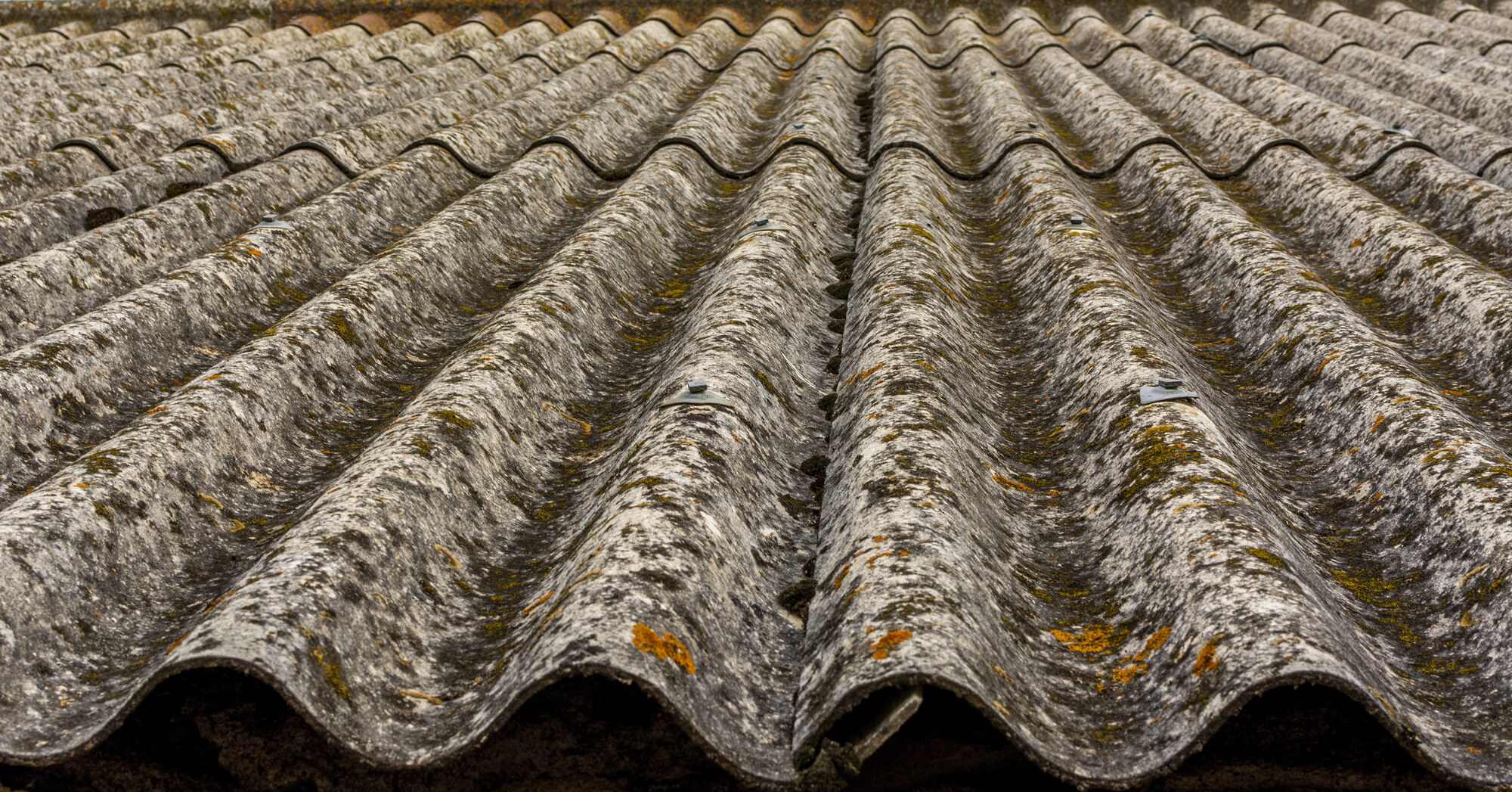
A block of apartments in Corralejo built in the late 1980s has corrugated fibre-cement sheets on the garage roofs, two fibre-cement water tanks on the terrace and grey downpipes of the same material running down the back façade. An owner who lives abroad reads that asbestos was banned in Spain in 2002, asks the administrator whether the community is now obliged to remove all of it, who is allowed to touch it and who pays, and is told three different things by three neighbours. This article gives the answer the law gives, with the texts in force on 21 October 2026: what fibre cement with asbestos is and what the 2002 ban did and did not do, whether there is a duty to remove it from a private building, who may carry out the work and under which permit, where the waste can go from an island without a landfill for it, how the community decides and who pays, what the councils of Fuerteventura and the subsidies have done so far, and a worked case for the roof of those garages.
What fibre cement with asbestos is, and what the 2002 ban did
Fibre cement is cement reinforced with fibres. Until the early years of this century the fibre was asbestos, and the material was everywhere a cheap, light and durable sheet was wanted: roof sheets, downpipes, water tanks, planters, flue pipes and flat panels. The ministerial order of 7 December 2001 that transposed the European ban explained why it had to go in one sentence, la exposición al amianto, al liberar fibras, está asociada con la asbestosis, mesotelioma y cáncer de pulmón, exposure to asbestos, which releases fibres, is associated with asbestosis, mesothelioma and lung cancer. Its single article ruled that from its entry into force queda prohibida la utilización, producción y comercialización de las fibras señaladas en el apartado anterior y de los productos que las contengan, the use, production and sale of those fibres and of the products containing them is prohibited, and it entrará en vigor a los seis meses de su publicación, entered into force six months after its publication in the Official Gazette of 14 December 2001, that is, in June 2002.
The same order settled the point that matters to a community with a 1980s roof. Products already in place were not condemned: their use seguirá estando permitido hasta su eliminación o el fin de su vida útil, remains permitted until their removal or the end of their useful life. Asbestos cement is a non-friable material, the fibres are bound in the cement, and the national institute for safety at work, the INSST, puts it plainly in its 2022 technical guide: la legislación permite que puedan seguir instalados y en uso mientras dure su vida útil, the legislation allows them to stay installed and in use for as long as their useful life lasts. A building finished before 2002 may have the material; a building finished after it should not. In Fuerteventura that puts most of the apartment blocks of Corralejo, Caleta de Fuste, Costa Calma and Puerto del Rosario built in the 1970s, 1980s and 1990s on the list of candidates, and the June 2024 directives of the three ministries name the usual suspects in buildings of that age, bajantes, depósitos de agua, jardineras o placas de cubiertas, downpipes, water tanks, planters and roof sheets. The water tanks of the island's communities have an article of their own, our piece on water in Fuerteventura for owners abroad.
Is there a duty to remove it?
Not a general one, and the date most people have heard of does not apply to them. The waste act of 2022, Ley 7/2022, added a provision on asbestos that is often misread. It orders that within one year of the act's entry into force, which was 10 April 2022, los ayuntamientos elaborarán un censo de instalaciones y emplazamientos con amianto incluyendo un calendario que planifique su retirada, the town councils shall draw up a census of installations and sites with asbestos, including a calendar that plans its removal, and it sets one deadline: las instalaciones o emplazamientos de carácter público con mayor riesgo deberán estar gestionadas antes de 2028, public installations and sites with the highest risk must be dealt with before 2028. The duty to draw up the census is the council's, the calendar is the council's, and the 2028 date is written for public sites. The directives the ministries published in June 2024 to help councils, guía metodológica de carácter no vinculante dirigida a los ayuntamientos, a non-binding methodological guide addressed to the councils, confirm that el censo debe recoger todos los emplazamientos e instalaciones de un municipio, con independencia de su titularidad, the census must cover every site and installation in the municipality regardless of ownership, dwellings included, but a private building's roof being listed in a council's census is not an order to remove it, and no text read for this article gives a private community a date.
What there is instead is a condition. Sound fibre cement may stay; deteriorated fibre cement may not. The INSST guide says of roofs that En el caso de cubiertas en mal estado, al haber llegado al final de su vida útil, se debe proceder a su retirada, where roofs are in a bad state, having reached the end of their useful life, their removal must proceed, and it explains why age matters even when nothing looks broken: fibre-cement sheets that left the factory as a non-friable material una vez instaladas en una cubierta aumentan progresivamente su friabilidad a lo largo del tiempo, once installed on a roof become progressively more friable over time, under sun, salt and rain. The guide also closes the door on the cheap fix of laying a new roof over the old one: En el caso de cubiertas en buen estado, el doblaje se desaconseja, where roofs are in good condition, doubling is advised against, because sheets break, holes are drilled and the asbestos is hidden for whoever comes next. For a community, the condition translates through the horizontal property act. Article 10 of Ley 49/1960 makes compulsory, without a prior vote, Los trabajos y las obras que resulten necesarias para el adecuado mantenimiento y cumplimiento del deber de conservación del inmueble y de sus servicios e instalaciones comunes, the works needed for the proper maintenance of the building and for compliance with its duty of conservation, including those required by safety and habitability. A cracked, flaking fibre-cement roof over the garages, or a downpipe shedding fragments, is a conservation problem with a hazardous material attached, and the building inspection the island's older blocks must pass puts it on paper, as our article on the ITE and the building's duty of conservation explains.
Who may touch it: the registered firm, the work plan and the labour authority
Nobody in the community, and no ordinary builder. Real Decreto 396/2006 governs every job in which workers may be exposed to asbestos fibres, and its scope names Trabajos y operaciones destinadas a la retirada de amianto, o de materiales que lo contengan, works and operations for the removal of asbestos or of materials containing it, as well as maintenance and repair of such materials, their transport and their disposal. Three rules follow from it. The first is identification: before any demolition or maintenance work on an older building, the contractor must identify the materials that may contain asbestos, asking the owners if necessary, and Si existe la menor duda sobre la presencia de amianto en un material o una construcción, deberán observarse las disposiciones de este real decreto que resulten de aplicación, if there is the slightest doubt about the presence of asbestos in a material or a structure, the decree's provisions must be observed. The second is the register: Todas las empresas que vayan a realizar actividades u operaciones incluidas en el ámbito de aplicación de este real decreto deberán inscribirse en el Registro de empresas con riesgo por amianto, every company that is to carry out activities within the decree's scope must be registered in the register of companies with asbestos risk, the RERA, kept by the labour authority of the region where the company has its main premises. The third is the plan: Antes del comienzo de cada trabajo con riesgo de exposición al amianto incluido en el ámbito de aplicación de este real decreto, el empresario deberá elaborar un plan de trabajo, before each job with a risk of exposure begins, the employer must draw up a work plan, which describes the material, the quantities, the workers, the procedures, the protective equipment and, in its own letter, Las medidas para la eliminación de los residuos de acuerdo con la legislación vigente indicando empresa gestora y vertedero, the measures for disposing of the waste under the legislation in force, naming the waste manager and the landfill.
The plan is not a private document. Article 12 says that El plan de trabajo se presentará para su aprobación ante la autoridad laboral correspondiente al lugar de trabajo en el que vayan a realizarse tales actividades, the work plan is submitted for approval to the labour authority of the place where the work is to be done, which in the Canary Islands is the regional government's Dirección General de Trabajo, the body the government's e-office names as resolving both the RERA registrations and the notices that precede each job. El plazo para resolver y notificar la resolución será de cuarenta y cinco días, the period to decide and notify is forty-five days, and if nothing is notified in that time el plan de trabajo se entenderá aprobado, the plan is deemed approved. A community therefore cannot have its garage roof taken down next week by the handyman who paints the railings: the firm must be on the register, the plan must be approved or the forty-five days must have run, and the firm must notify the authority before it starts. The decree does carve out small, low-exposure tasks, among them en la retirada sin deterioro de materiales no friables, the removal without damage of non-friable materials, but the INSST guide warns that the exception is for sound material only, No se consideran incluidos en este apartado los materiales degradados, degraded materials are not included, and a weathered island roof is exactly that. The construction-waste rules add a paper trail of their own: under Real Decreto 105/2008 the works project carries a waste study with an inventory of the hazardous waste a refurbishment will produce, and the contractor hands the waste to a manager so that La entrega de los residuos de construcción y demolición a un gestor por parte del poseedor habrá de constar en documento fehaciente, the delivery of the waste to a manager is recorded in a reliable document.
Where the waste goes from an island with nowhere to put it
The waste act makes the producer responsible until the material is treated. Article 20 of Ley 7/2022 gives the producer or holder three options, the normal one being to Encargar el tratamiento de sus residuos a un negociante registrado o a un gestor de residuos autorizado que realice operaciones de tratamiento, entrust the treatment of its waste to a registered dealer or an authorised waste manager that carries out treatment, and Dichas obligaciones deberán acreditarse documentalmente, those obligations must be proven with documents. In practice the registered firm that removes the sheets is also the manager that packs, labels and transports them, and the community's file should end with the transfer document and, where the manager only collects, the name of the final installation. The Cabildo of Fuerteventura said the same after fibre-cement sheets were found dumped near Montaña del Sombrero in May 2024: ante este tipo de residuos, se debe avisar a un gestor autorizado porque se trata de materiales nocivos para la salud, with this kind of waste an authorised manager must be called because the material is harmful to health, while the island's four recycling points, in Lajares, Risco Prieto, Tuineje and Mal Nombre, are for ordinary household waste. The press report of that case put the fines for dumping at between €100,000 and €600,000.
The island's real problem is where the sheets go after the lorry. The Canary Islands have no landfill authorised for asbestos. According to the regional press on 8 June 2026, En 2024, Canarias envió a la península unas 4.200 toneladas de amianto, in 2024 the Canary Islands sent some 4,200 tonnes of asbestos to the mainland, and since April 2026 Andalusia, the usual destination, no longer accepts hazardous waste from other regions. The regional government's director of environmental quality said that landfills of the islands' own were being planned and that Trabajaremos con las asociaciones de gestores para ver si tenemos que plantear ayudas, incentivos fiscales u otras medidas, the government would work with the managers' associations to see whether aid, tax incentives or other measures had to be proposed. A month earlier a member of the Canary parliament had warned, in words the island radio reported on 14 May 2026, that the removals already scheduled could stall for want of a destination. For a community this means two things: the quote must state where the waste will go and what the transport costs, and a removal planned for next year may cost more, or wait longer, than one priced today.
The decision, the vote and who pays
The horizontal property act answers the question the owner abroad asked first. If the fibre-cement element is a common element in a state that threatens safety or the duty of conservation, the works are the compulsory works of article 10, and the meeting's role is reduced to money: limitándose el acuerdo de la Junta a la distribución de la derrama pertinente y a la determinación de los términos de su abono, the meeting's resolution is limited to the distribution of the relevant levy and to the terms of its payment. Every owner pays by quota, because article 9 obliges each of them to Contribuir, con arreglo a la cuota de participación fijada en el título o a lo especialmente establecido, a los gastos generales, contribute, according to the participation quota fixed in the title deed or to what is specially established, to the general expenses. If the element is sound and the community simply prefers to be rid of it, the removal is an ordinary resolution, for which bastará el voto de la mayoría del total de los propietarios que, a su vez, representen la mayoría de las cuotas de participación, the vote of the majority of all owners representing the majority of the quotas suffices, on second call the majority of those present, and the cost is again a general expense. How the vote is prepared, how the levy is split and how the licence works are the subject of our article on roof works in a community, and the same mechanics apply here: in the Canaries a conservation work that adds no volume needs a prior communication to the town hall, not a licence, and a technical director who writes the specification and signs the completion.
Private elements follow the other rule. Article 9 also obliges each owner to Mantener en buen estado de conservación su propio piso o local e instalaciones privativas, keep their own flat, premises and private installations in good condition, and the courts apply it to fibre cement. In May 2026 the provincial court of Ourense refused an owner who had replaced the whole fibre-cement roof of his terrace with sandwich panels and wanted the community to pay: the terrace was described as his in the 1976 deed, the roof was a structure of his own, and es a su propietario al que le compete el deber de mantenimiento y conservación de dicha estructura, sin que dicha obligación deba ser asumida por la Comunidad de Propietarios, it is for its owner to maintain and conserve that structure, without that obligation falling on the community. In October 2025 the provincial court of Ceuta upheld a community that had voted to remove a storeroom roofed with fibre cement on a common patio against the owners who used it, taking as uncontested that the roof contenía amianto, el cual requería medidas especiales para su retirada, transporte y depósito, contained asbestos, which required special measures for its removal, transport and disposal. And in July 2026 the provincial court of Cantabria ruled against an owner who had obstructed the community's scaffolding over his fibre-cement sheds by invoking the asbestos: he no justifica que no se fueran a adoptar las medidas especiales, did not show that the special measures would not be taken, and ended up paying the community's extra costs. None of these is a Supreme Court judgment on fibre-cement roofs, which this article did not find; they are three recent readings of the same two articles, and they point the same way: the material changes the method, not the rule on who pays.
The census in Fuerteventura and the subsidies, as of October 2026
The one-year deadline for the municipal censuses expired in April 2023. On 21 October 2026 one of the island's six councils had a census under way. Puerto del Rosario signed, in May 2024, a contract for an inventory of its own buildings with asbestos, schools first, and the island press reported that En una fase posterior, el Consistorio capitalino elaborará un censo de materiales con contenido en amianto de uso doméstico, in a later phase the capital's council will draw up a census of household materials containing asbestos. That phase exists: the council's environment page states that esta abierto el plazo de inscripción en el censo para la retirada de amianto en viviendas, the registration period for the census for the removal of asbestos from homes is open, for elementos no estructurales con amianto, tales como bidones, planchas onduladas, jardineras o tuberías, non-structural elements with asbestos such as drums, corrugated sheets, planters or pipes, with an application at the council's registry or by form, the applicant's identity document, proof of ownership or tenancy and a description and location of the elements. It is a census, not a removal service, and a community in Puerto del Rosario loses nothing by registering its sheets and tanks. For the other five municipalities the position reported in parliament on 14 May 2026 was blunt: Solo Puerto del Rosario ha iniciado el censo en su municipio, mientras los otros cinco ayuntamientos majoreros incumplen el plazo legal, only Puerto del Rosario has started the census in its municipality, while the other five councils of the island are in breach of the legal deadline. This article found no census published by La Oliva, Pájara, Antigua, Tuineje or Betancuria on that date.
On money the position is simpler and worse. No subsidy call of the Canary Government or of the Cabildo for the removal of asbestos from private buildings was found on 21 October 2026, and the regional director's words of June 2026 describe aid as something still to be studied. The state housing plan for 2026 to 2030, Real Decreto 326/2026, treats the removal as a cost the rehabilitation aids may cover rather than as a programme of its own: among the eligible actions of the rehabilitation aid it lists la retirada de productos de la construcción que contengan otros elementos perjudiciales para la salud humana como el amianto, the removal of construction products containing other elements harmful to human health such as asbestos; the habitability and sustainability works of the building-level aid are eligible incluida la retirada de productos de la construcción que contengan amianto, including the removal of construction products containing asbestos; and a building entering the integral rehabilitation line must Retirar del edificio o ámbito de actuación aquellos productos de construcción que contengan amianto, remove from the building any construction products containing asbestos, by a registered firm and with the waste handled under the construction-waste rules. Those aids reach a Fuerteventura community through the Canary call that applies the plan, with the percentages, ceilings and conditions our article on energy works and the reserve fund sets out; a community planning a façade or a roof with a subsidy in mind should add the fibre cement to the same project rather than remove it separately and unaided.
A worked case: the garage roof in Corralejo
The garages of the Corralejo block have corrugated fibre-cement sheets, cracked at two corners and shedding grey powder into the gutters. The table follows the file from the first photograph to the last receipt.
| The step |
Who does it, and under which rule |
| Identification |
The technical director confirms fibre cement with asbestos from the age and the sheet, or samples it; Real Decreto 396/2006 requires the check before any work |
| The decision |
Deteriorated common element: compulsory works under article 10, the meeting only distributes the levy; sound element removed by choice: ordinary majority under article 17 |
| The quotes |
Three quotes from firms on the RERA; each states the plan, the manager and the destination of the waste |
| The work plan |
Drawn up by the firm, filed with the Dirección General de Trabajo; forty-five days to decide, silence means approval; notice to the authority before the start |
| The town hall |
A prior communication for a conservation work that adds no volume; a licence only if the scaffolding occupies the street |
| The removal |
Sheets wetted and lifted whole from below, no cutting or breaking, packed and labelled on site; no owner on the roof |
| The waste |
Handed to the authorised manager with the transfer document; shipped off the island, which the quote prices and dates |
| The file |
Plan, approval or silence, notice, transfer document and the manager's certificate, kept with the minutes for every owner to see |
The two cracked corners decide the route. A sound roof could wait and be scheduled with the next façade works, ideally inside a subsidised project; a shedding one is a conservation work the community owes now, and every owner, present or abroad, pays by quota. What the community should refuse is the third quote that arrives from a general builder, cheaper because it skips the plan and the manager: the firm would be breaking the decree, the community would have no document for the waste, and the next buyer's surveyor or the next building inspection would find the problem where it was left.
What we do
Our maintenance service in Fuerteventura works with vetted local trades, asks for three quotes for every significant job and checks the work on site before the invoice is paid, with photographs from the first report to the close visible to every owner in the portal. For fibre cement that means a technical director who identifies the material, quotes only from firms on the asbestos register, the work plan and the authority's approval or silence in the community's file before a sheet is touched, and the waste manager's transfer document at the end. When the removal can ride on a larger project, our works and grants service prepares the vote with clear documentation, compares the quotes line by line, supervises the works stage by stage and prepares and submits the subsidy file, so that the asbestos leaves with the façade or the roof it was part of. Ask for a fixed fee and tell us the year the building was finished.
Common questions
Our building has fibre-cement roofs and tanks. Are we obliged to remove them?
Not by any general deadline. The 2002 ban allows products already installed to remain until the end of their useful life, and the 2028 date in the waste act concerns public sites with the highest risk. What binds a community is the duty of conservation: a fibre-cement element in a bad state, at the end of its life, must be removed, and the works are then compulsory under article 10 of the horizontal property act. A sound element may stay, and should not be covered over.
Can the community's usual builder take the sheets down?
No. The work falls under Real Decreto 396/2006: only a firm registered in the asbestos register may do it, with a work plan approved by the Canary labour authority or deemed approved after forty-five days, and a notice before the start. The waste goes to an authorised manager with a transfer document. An owner or a caretaker breaking sheets on a roof is both a health risk and a breach the community would answer for.
Who pays for the removal?
For a common element, every owner by quota, as a general expense; the meeting decides only how the levy is split and when it is paid. For a private element, such as a fibre-cement roof over a terrace that the deed describes as the owner's, the owner pays, as the provincial court of Ourense held in May 2026. An owner who obstructs the works by invoking the asbestos without proving that the measures are missing may end up paying the extra costs, as the Cantabria court ruled in July 2026.
Is there a subsidy in Fuerteventura?
On 21 October 2026 no call of the Canary Government or the Cabildo for private buildings was found, and the regional government described aid as something still to be studied. The state housing plan for 2026 to 2030 lets the rehabilitation aids cover the removal when it forms part of a wider project, through the Canary call that applies the plan. Puerto del Rosario keeps a census of household asbestos elements open for registration; it records, it does not remove.
Where does the waste go?
To an authorised manager named in the work plan, and from there off the island: the Canary Islands have no landfill authorised for asbestos, the mainland sites that received some 4,200 tonnes in 2024 have narrowed since Andalusia closed its doors in April 2026, and the regional government says it is planning landfills of its own. The quote must state the destination and the transport cost, and the file must keep the transfer document.