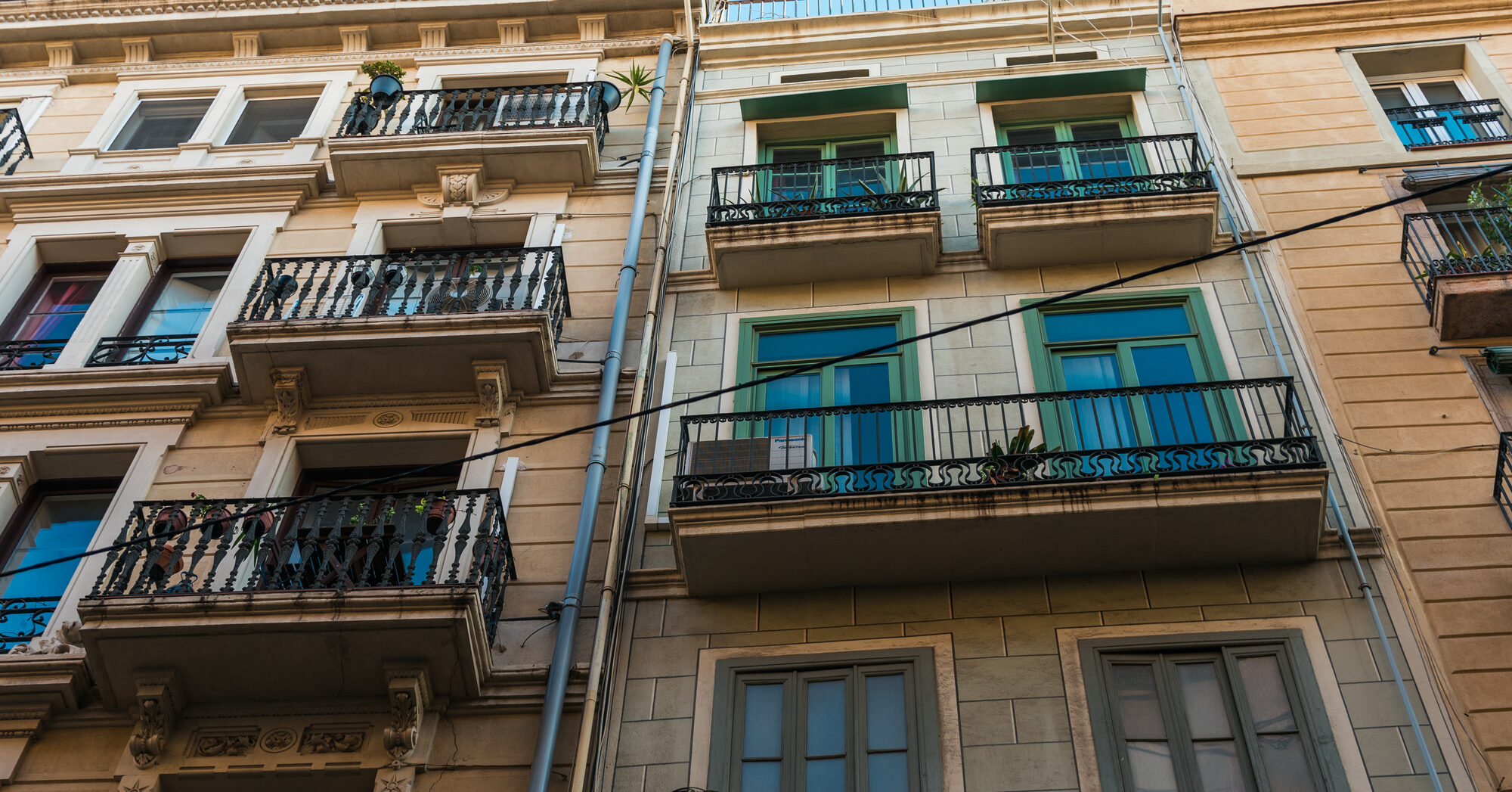
Most of the buildings we administer on Fuerteventura were built between the late seventies and the early two-thousands, and a good share of them have no lift, a flight of steps at the entrance and a generation of owners who bought in their fifties and are now past seventy. The question arrives in the same form every year: one owner needs a ramp or a lift, the others do not want to pay — who decides? The Horizontal Property Act answers in three rules that most meetings have never read together: a rule that makes some accessibility works obligatory without any vote, a cap that says how much the community can be made to spend, and a majority route for everything above the cap. Add the reserve fund, the State and Canary subsidies and a regional tax deduction, and the question turns from whether into how much, and who signs. This piece sets out the three rules, a worked example on a building in Corralejo, the money, and the way we run the item at the meeting.
Who can demand the works, and what the community must do
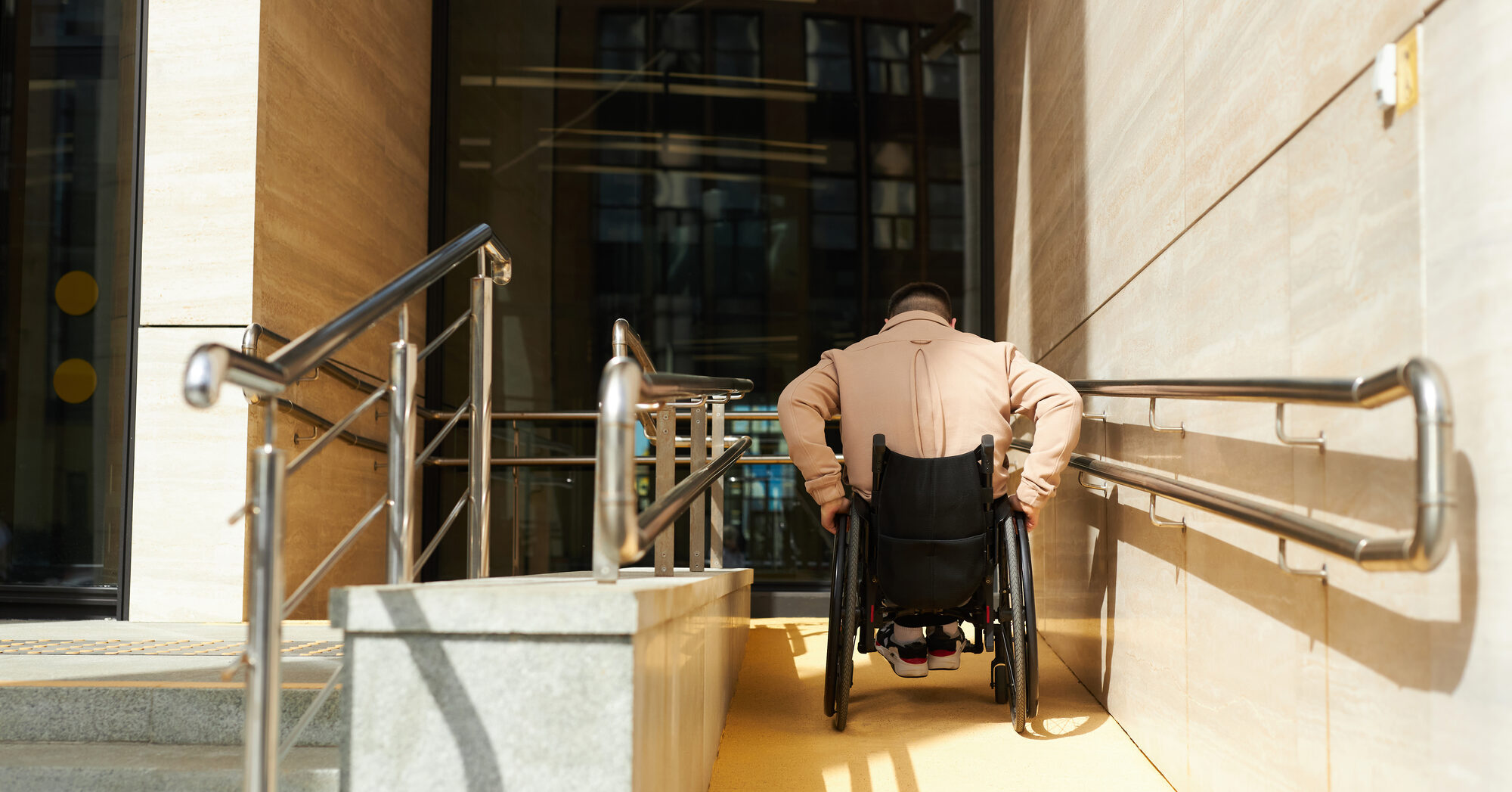
Since the 2013 reform the Act lists works that are «obligatory and require no prior agreement of the owners' meeting, whether or not they change the constitutive title or the statutes»: among them «the works and actions necessary to guarantee the reasonable adjustments in universal accessibility and, in every case, those required by owners in whose flat or premises persons with a disability, or persons over seventy, live, work or volunteer», to assure them an adequate use of the common elements, «as well as the installation of ramps, lifts or other mechanical and electronic devices that favour their orientation or their communication with the outside» (Ley de Propiedad Horizontal, art. 10.1.b). Three things in that sentence decide most disputes. The request comes from an owner, but the person who needs the works may be anyone who lives, works or volunteers in the flat — a tenant's parent, a resident carer. Age alone is enough: over seventy, no certificate of disability required. And the meeting does not vote on whether: when a work is obligatory, «the agreement of the meeting is limited to the distribution of the corresponding levy and the terms of its payment», the cost is borne by the owners by quota, and each flat is charged with it exactly as with the ordinary expenses (art. 10.2).
The «reasonable adjustments» the Act refers to have a legal definition: the measures that make a building accessible «effectively, safely and practically, without a disproportionate burden», and the burden is disproportionate, in a building under the horizontal property regime, «when the cost of the works, spread annually and after deducting the public aid to which there is a right, exceeds twelve ordinary monthly instalments of common expenses» (Real Decreto Legislativo 7/2015, art. 2.5). Existing buildings capable of reasonable adjustments were required to meet the basic accessibility conditions by 4 December 2017 (Real Decreto Legislativo 1/2013, additional provision 3) — a deadline that passed quietly in most communities and that a council inspection can still invoke.
The twelve-month test: how the cap works
The obligation has a ceiling, and the ceiling is the community's own budget. The works are obligatory «provided that their annual cost, after deducting the subsidies or public aid, does not exceed twelve ordinary monthly instalments of common expenses» — one year of ordinary fees for the whole building. Two sentences follow that most owners have not heard: the works do not stop being obligatory because the requesting owners take on the part of the cost above the cap; and they are obligatory in any case when the public aid the community can obtain reaches 75 % of their cost (art. 10.1.b).
A building of 24 flats in Corralejo with an ordinary budget of €36,000 a year — €125 a month per flat on average — receives a request for a lift from an owner of seventy-four. The quote is €70,000. Under the building-level programme of the 2026–2030 State Housing Plan the aid for accessibility works may reach 70 % of the cost, 80 % where a resident is over sixty-five or has a recognised disability of 33 % or more, within a ceiling of €13,000 per dwelling that rises to €18,000 in that case (Real Decreto 326/2026, art. 99); with the 80 % line the community's net cost is €14,000, well under the €36,000 test, and the lift is obligatory with no vote. Without any aid — because no call is open when the meeting is held — the net cost is €70,000, above the cap: the works are not obligatory by themselves. The community then has three ways forward: the requesting owner pays the €34,000 above the cap and the rest stays obligatory; the community applies for the aid first and re-runs the test with the grant resolved; or the meeting approves the lift by majority, and the cap disappears.
One caution on the arithmetic: the Act speaks of the cost «spread annually», and courts have read that phrase with the financing in view — a lift paid over several years weighs less each year than a lift paid at once. How the levy is scheduled therefore changes the test, and it is the first thing we design when a request arrives.
Beyond the cap: the majority route and the dissenters
Works «whose purpose is the removal of architectural barriers that hinder the access or mobility of persons with disabilities and, in every case, the installation of lift services, even when they involve amending the constitutive title or the statutes», need «the favourable vote of the majority of the owners who, in turn, represent the majority of the participation quotas»; and «when agreements for accessibility works are validly adopted, the community is bound to pay the costs even where their annual amount exceeds twelve ordinary monthly instalments» (art. 17.2). That is the whole difference between accessibility and any other improvement. For innovations «not required for the adequate conservation, habitability, safety and accessibility of the building», a three-fifths majority is needed and a dissenting owner is not bound when the cost exceeds three monthly instalments (art. 17.4); a lift is by definition required for accessibility, so the dissenter pays with everyone else, whether or not their flat is on the ground floor. Owners who did not attend and were notified of the agreement are counted as favourable votes unless they object in writing within thirty days, and the agreement may be challenged only within the Act's windows — the mechanics our meeting guide sets out.
Where the money comes from: the reserve fund, the levy and the subsidies
- The reserve fund. Every community must hold a fund of at least 10 % of its last ordinary budget, and the Act names among its uses «the accessibility works of article 10.1.b» and «the accessibility and energy-efficiency works of article 17.2» (art. 9.1.f). In the Corralejo building that is €3,600 at the legal minimum — a start, not a lift; well-run communities on the island carry more, and our annual-accounts piece explains how to read what yours holds.
- The levy. Whatever the fund does not cover is a derrama distributed by participation quota — the ordinary rule for general expenses, which our fees and levies guide covers — payable on the schedule the meeting fixes, and secured on each flat as the ordinary fees are.
- The State plan, run by the Canary Government. The 2026–2030 State Housing Plan finances accessibility works in residential buildings — lifts, ramps, stairlifts, automatic doors, the adaptation of common elements — through calls that the regional government opens; at building level the aid is capped at 70 % of the cost, or 80 % with a resident over sixty-five or with a recognised disability, and at €13,000 per dwelling rising to €18,000, €20,500 with a disability of 65 % or more and €22,000 where the works make the whole building accessible (Real Decreto 326/2026, arts. 95–99); at dwelling level the aid for a resident with a disability may reach 80 % within €15,000 or €18,000 per home (art. 108). The Canary Government's last accessibility call under the previous plan closed on 30 June 2024, with 60 % of the cost, 80 % where a resident had a functional disability or was over seventy-five; the calls under the new plan are the regional government's to open, and whether one is open on the day of your meeting is a question to ask us the week before.
- The regional tax deduction. A Canary resident who pays for works «strictly necessary for accessibility» in the home where a person with a recognised disability of 65 % or more lives may deduct 14 % of what they paid in the regional part of their income tax — 18 % if that person is also over sixty-five — on a base of up to €15,000 a year, net of public aid received (Decreto Legislativo 1/2009, arts. 14 ter and 14 quater). Whether an owner's share of a common lift qualifies depends on the certificate and the works; we ask the owner's tax adviser before the levy is scheduled.
The meeting: how we run an accessibility item
- The request, in writing. The owner's letter to the administrator with the certificate of disability or the proof of age, and what is asked for — a ramp, a lift, a stairlift, an automatic door.
- The technical file. A report on the building's accessibility deficiencies — where an inspection report exists, ours starts from it, as our building-inspection piece explains — and two or three quotes with the licence and the project fees included.
- The aid, before the works. No programme pays for works already begun: the application goes in first, and the twelve-month test is run with the aid resolved, or with the 75 % line in view.
- The item on the agenda. Worded to show which rule applies: an obligatory work under article 10.1.b with the levy to distribute, or an accessibility work put to the majority of article 17.2. Owners abroad vote by proxy or in writing; the thirty-day rule counts the silent ones.
- The levy plan. The reserve fund's contribution, the levy by quota, the schedule, and the bank line where the community finances the works — the numbers that decide the annual test.
- The works. Licence, contractor, the lift company's maintenance contract from day one, and the minutes that record who pays what, so that the next buyer of any flat reads it in the certificate we issue at the sale.
Where we come in
Our administrators in Fuerteventura receive the request, commission the accessibility report and the quotes, file the Canary Government's aid application before the works begin, run the twelve-month test and draft the levy plan, word the agenda item under the right article, count the proxies and the thirty-day silences, and manage the works and the lift's maintenance contract afterwards. See our works and grants and community maintenance services, or ask for a quote.
Common questions
Can one owner force the community to install a lift?
Yes, within a cap. An owner in whose flat a person with a disability or a person over seventy lives, works or volunteers may require accessibility works, including a lift, without any vote, provided the community's annual cost after public aid does not exceed twelve ordinary monthly instalments — one year of ordinary fees. Above that, the requesting owner may pay the excess, public aid of 75 % makes the works obligatory anyway, or the meeting may approve them by majority, after which the community pays without a cap.
I live on the ground floor. Do I have to pay for the lift?
Yes. Accessibility works are borne by all owners by participation quota, whether obligatory under article 10.1.b or approved by majority under article 17.2, and the rule that frees a dissenting owner from an improvement costing more than three monthly instalments does not apply to works required for accessibility. Only the statutes, or a valid exemption agreed in the title, change the distribution.
What subsidies exist for a lift in Fuerteventura in 2026?
The 2026–2030 State Housing Plan funds accessibility works in residential buildings at up to 70 % of the cost — 80 % where a resident is over sixty-five or has a recognised disability — with ceilings of €13,000 to €22,000 per dwelling, through calls the Canary Government opens; its last call under the previous plan closed on 30 June 2024 at 60 % and 80 %. Applications go in before the works begin. A Canary resident may also deduct 14 % or 18 % of accessibility works for a person with a disability of 65 % or more, on up to €15,000 a year.
Can the reserve fund pay for the works?
Yes. The Act names the accessibility works of articles 10.1.b and 17.2 among the uses of the reserve fund, which must hold at least 10 % of the last ordinary budget. In practice the fund covers a ramp or an automatic door and a fraction of a lift; the rest is a levy by quota, scheduled over the years the meeting decides.