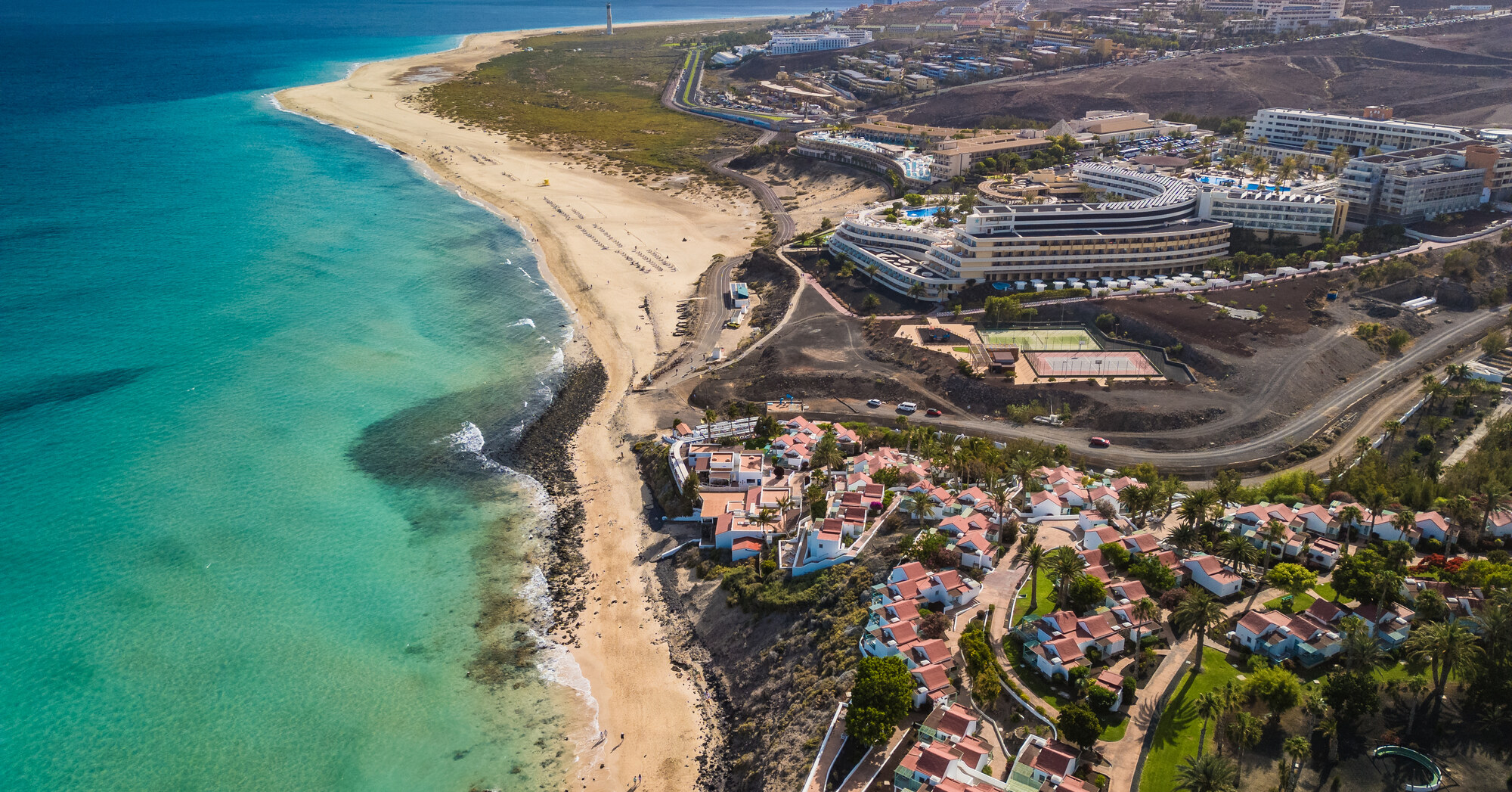
A community of twenty-four flats in a block finished in 1979, a hundred metres from the beach in one of the island's northern resorts, votes a façade repair, a new lift and the glazing of the rear terraces. The architect who quotes for the job uses the words «fuera de ordenación», the president asks what that means for the vote, and three owners write to ask whether the building is illegal. It is not, or not necessarily: the Canary land law keeps three different situations behind that phrase and its cousin, the «situación legal de consolidación», each with its own list of the works a community may still do, and a decree-law of January 2026 lengthened one of those lists. This note reads Ley 4/2017 as it stands on 21 October 2026, the 2018 regulation that develops it, the Coasts Act and its regulation for the blocks near the shore, the state land law's rule on the Land Registry and four judgments of the Canary High Court from the last ten months, and then applies them to the three works on that agenda. Quotations are in Spanish with the reading in English; the building is invented, the law is not.
Three situations, not one
The starting point is whether the building was legal when it was built. Ley 4/2017 reserves its two gentler situations for buildings existentes al tiempo de la entrada en vigor de un nuevo instrumento de ordenación, erigidas de conformidad con la ordenación vigente en el momento de su ejecución o posteriormente legalizadas, que resultasen disconformes con la nueva regulación sobrevenida, existing when a new planning instrument came into force, built in accordance with the rules of their day or legalised later, and now at odds with the rules that came after (article 159.1). A block licensed in 1979 under a plan that allowed five floors, in a street where the plan now allows three, is exactly that. Such a building falls into the situación legal de consolidación when it is que resulten disconformes, aunque no incompatibles con las nuevas determinaciones de aplicación, at odds with, but not incompatible with, the new rules (159.1.a), which is the common case; it falls into the situación legal de afectación por actuación pública only when the new plan needs its land for a road, a square, a public facility or another public system (159.1.b), and even then the affected part may be one slice of the plot while the rest stays consolidated.
The third situation has a different birth. A building, or a part of one, is fuera de ordenación when it was built without a title or against one and the town hall can no longer order its restoration: the law puts there every construction respecto de las cuales ya no sea posible el ejercicio de las potestades de protección de la legalidad y restablecimiento del orden jurídico perturbado, in respect of which the powers to protect legality and to restore the disturbed legal order can no longer be exercised (article 362.1). The time limits that close those powers have a section of their own below. Two details of the definition matter for a community. A work that could still be legalised does not leave the situation by being tolerated: esos inmuebles permanecerán en esta situación hasta la obtención de los títulos habilitantes correspondientes, those properties remain in this situation until the corresponding titles are obtained (362.1). And the situation attaches to the work, not to the whole block: a terrace that nobody licensed can be out of plan on the façade of a building that is itself perfectly legal, and the community's roof and lift are judged on their own papers.
What a consolidated building may do, and what changed on 28 January 2026
For the consolidated building the list is long, and it grew this year. Since 28 January 2026 the law admits, as a general rule, obras de mantenimiento, conservación, reforma, modernización, demolición parcial, consolidación, rehabilitación, remodelación, y ampliación, incluso las que tengan como efecto mantener y alargar la vida útil del inmueble, maintenance, conservation, reform, modernisation, partial demolition, consolidation, rehabilitation, remodelling and extension works, including those whose effect is to keep and lengthen the useful life of the property (article 160.1.a). The word «ampliación» is new: until 27 January the paragraph listed the same works without the extension and closed with the opposite rule, that no increase of volume or floor area against the new plan was admissible. The Canary decree-law of 26 January 2026 turned that rule around, siendo admisible el incremento de volumen o edificabilidad previsto en el nuevo plan, an increase of volume or floor area foreseen in the new plan now being admissible (160.1.a), with one price: when the community adds volume it must bring the building to the new alignment, while every other work leaves it where it stands. The same reform opened the door on uses, which the earlier text kept half shut: Se admitirán cambios de uso salvo que sean manifiestamente incompatibles con el destino asignado por la nueva ordenación del inmueble, changes of use are admitted unless manifestly incompatible with the destination the new plan assigns to the property (160.1.b), and works that a sectoral rule demands for an activity to continue may even extend the building where no rehabilitation or remodelling would do.
Two rules of the same article decide the worst days. If the community demolishes the whole block, or a use the new plan rejects stops for good, the next project follows the plan in force when the new licence is granted (160.1.d). A demolition forced on the community, by a catastrophe or by an order to avoid a risk, does not cost it the building: in that case se permitirá la reconstrucción con la misma edificabilidad del inmueble sustituido, reconstruction with the same floor area as the building replaced is allowed (160.1.e). The building affected by a public action follows the consolidated regime too, unless the expropriation is programmed within five years of the plan's approval, in which case the works allowed shrink to las precisas para el cumplimiento del deber de conservación de los inmuebles durante el periodo que reste hasta la expropiación, those needed to meet the duty of conservation during the time left before the expropriation (160.2.a), no change of use that needs other works is admitted, the exceptional reconstruction does not apply, and nothing the community spends counts in the expropriation price.
What a building out of plan may do: repair, conserve, nothing taller
The out-of-plan list is short and the law writes it as a limit. In those constructions solo podrán realizarse las obras de reparación y conservación necesarias para garantizar la habitabilidad, accesibilidad y ornato legalmente exigibles, only the repair and conservation works needed to guarantee the habitability, accessibility and decoration the law requires may be carried out (article 362.2), plus the works that adapt the premises to a consolidated use or to a use the current plan allows, and in every case siempre que tales obras no supongan incremento de la volumetría o altura de la edificación existente, provided the works add no volume or height to the existing building (362.2). Read for a community, that sentence allows the re-waterproofing of the roof, the repair of the render, the renewal of the pipes and the installation a lift needs for accessibility, and forbids the extra floor, the enclosed terrace and the covered pool; it also says that whatever is spent on those repairs never raises the price in an expropriation. The one exception is sectoral: where the use is consolidated, the town hall may license complementary uses and la ejecución de las obras estrictamente necesarias para cumplir las medidas obligatorias impuestas por la legislación sectorial que sean precisas para garantizar el mantenimiento y viabilidad de la actividad, the execution of the works strictly necessary to meet the mandatory measures that sectoral legislation imposes to keep the activity going (362.3), which is how a fire-safety staircase or a lift the accessibility rules demand can reach a building that may not grow otherwise.
The law adds two notes a buyer's survey rarely carries. The declaration of an illegal building as out of plan es causa expropiatoria por incumplimiento de la función social de la propiedad, is a ground for expropriation for breach of the social function of property (362.4), and in that expropriation nothing built against the plan and never legalised is paid for. And a building with ethnographic or architectural value, in either situation, may be taken down and rebuilt with its own materials when it is in manifest ruin or its restoration would mean demolishing more than half of its structure: such buildings podrán obtener autorización para el desmontaje de los paramentos afectados y su reposición constructiva total o parcial, may obtain authorisation to dismantle the affected walls and rebuild them in whole or in part (article 161), a rule the Canary High Court applied on 20 May 2026 to an old house on protected rustic land in La Gomera, where it found the value proven and the reconstruction allowed (STSJ Canarias 257/2026). It is a rule for old stone, not for a 1979 block, but it is the only route in the law from «fuera de ordenación» to a new building on the same spot.
Ten works, two columns
The agenda of a community rarely uses the law's words. The table turns the works that reach our office most often into the two regimes: the first column is the community's question, the second is the law's answer for the consolidated building and then, after the dot, for the building out of plan.
| The work on the agenda |
Consolidated (article 160) · Out of plan (article 362) |
| Re-waterproofing the roof and the terraces |
Yes, as conservation · Yes, as a repair needed for habitability; neither adds height. A prior communication for the first, a licence for the second |
| Repairing the render, the balconies and the railings |
Yes · Yes, as the conservation and decoration the law requires, with the façade's shape and the open terraces left as they are |
| Reinforcing the structure after an inspection |
Yes, as consolidation · Yes, as a repair needed for safety and habitability, inside the same volume |
| Installing a lift |
Yes · Yes, as the accessibility the law requires, provided the shaft adds no volume or height; near the shore the Coasts regulation says a lift housing on the roof does not count as volume |
| Glazing the rear terraces |
Only if the new plan foresees that volume, with a licence for a façade project · No: it is an increase of volume |
| Adding a floor or roofing the pool |
Only where the new plan allows the extra floor area · No |
| Changing the use of a common premises |
Yes, unless manifestly incompatible with the plan's destination · Only to the consolidated use or to a use the current plan allows, with no extra volume |
| Solar panels on the roof |
Yes · Yes: the law names both situations, by prior communication |
| Charging points in the garage |
Yes · Yes, by prior communication; nothing is built |
| Rebuilding after a fire or a storm |
With the same floor area as the building replaced · The law gives no right to rebuild; the new project follows the plan in force |
The title the works need is the detail the table carries in its first row and the one that changes the calendar. For a consolidated building, Obras de conservación, restauración, reforma, rehabilitación o reestructuración de edificaciones e instalaciones, siempre que no afecten a edificios catalogados ni supongan incremento de volumen o edificabilidad, conservation, restoration, reform, rehabilitation or restructuring works on buildings and installations that touch no listed building and add no volume or floor area, go by prior communication (article 332.1.a), and only the extension, the general change of the façade or the glazing of terraces that affects the whole façade needs a licence (330.1.f). For a building out of plan the law takes the shortcut away: among the acts that need a licence are Las obras que se realicen en instalaciones, construcciones, edificaciones e infraestructuras que se encuentren en situación de fuera de ordenación, the works carried out on installations, constructions, buildings and infrastructures that are in the situation of being out of plan (330.1.r), so the same roof repair that a legal block communicates one month ahead waits for a licence on the block next door. The one act the law sends to a prior communication in every situation is the roof's photovoltaic installation, en las situaciones de conformidad, legal de consolidación o de fuera de ordenación, in the situations of conformity, legal consolidation or out of plan (332.1.r), and since 15 August 2026 the licence file itself can carry a private conformity report instead of waiting for the municipal technician, which our piece on the 2026 conformity reports explains work by work.
The four-year clock, and the works that never prescribe
A work becomes out of plan by the passing of time, and the law measures that time precisely. The town hall may open restoration proceedings at any time while the works are in progress, and once they are finished En el plazo de cuatro años desde su completa terminación, within four years of their complete termination, for works that needed a licence (article 361.1.b) and within the same four years for works that needed a prior communication (361.1.c). Complete termination is not the last invoice: the works are finished when they estén dispuestas para servir al fin o uso previstos sin necesidad de ninguna actuación material posterior, salvo obras de ornato y embellecimiento, are ready to serve their intended purpose or use without any further material work, except decoration and embellishment (361.3). When the four years pass with no proceeding opened, the construction enters the situation of article 362 (361.4). An order already made keeps its own clock: the town hall may execute it En el plazo de diez años contados desde que la orden de restablecimiento goce de ejecutividad, within ten years from the day the restoration order became enforceable (361.2.c), after which the order itself lapses.
Who proves the date is the question that decides most files. The 2018 regulation puts it on the owner: La carga de la prueba de la completa terminación corresponde a quien alegue la limitación temporal para el ejercicio de las potestades de restablecimiento o sancionadora, the burden of proving complete termination lies with whoever invokes the time limit on the restoration or sanctioning powers (Decreto 182/2018, article 46.4), and where the work could not be seen from a public road the date must come from a public document, an official photograph or a private document whose date counts against third parties only from the day it became certain (46.5). The Canary High Court reads the clock the same way: on 22 December 2025 it rejected a company's plea of prescription in Tacoronte because the law ties the start of the term to real completion, anudando el dies a quo a la terminación efectiva, no a meras noticias o imágenes previas, tying the starting day to effective termination, not to mere earlier reports or images (STSJ Canarias 435/2025), the works having still been in progress in June 2018 when proceedings opened in 2021.
Some works never reach the four years. The law lifts the time limits for building En dominio público o en las zonas de protección o servidumbre del mismo, on public domain or in its protection or easement zones (361.5.b.2.º), which on this island means the first line of the coast; for works on environmentally protected rustic land, on listed buildings or those declared of cultural interest, on public roads, open spaces and green zones, and on the private non-buildable areas that count towards the accommodation capacity of a tourist centre (361.5), a point every resort community should read twice. The High Court added the historic quarters on 28 January 2026: in a protected old town no está sometido a plazo el ejercicio de la potestad de exigir el cumplimiento de las normas urbanísticas de un inmueble ubicado dentro del casco histórico protegido, the power to demand compliance with the planning rules for a property inside the protected historic quarter is not subject to any time limit (STSJ Canarias 51/2026). A terrace glazed without a title on a block inside the coastal protection zone, or on a listed façade, is never made safe by the calendar.
On the coast: the Coasts Act keeps its own list
The block of the example stands a hundred metres from the beach, and that is the width of the Coasts Act's protection easement, measured inland from the inner limit of the shore (Ley 22/1988, article 23.1); where the land was already urban when the Act came into force in 1988 la anchura de la servidumbre de protección será de 20 metros, the width of the protection easement is 20 metres (third transitional provision). Inside that strip the Act has its own list for the buildings that were there first. Those built with their licence before 1988 and contrary to the Act may receive obras de reparación, mejora, consolidación y modernización siempre que no impliquen aumento de volumen, altura ni superficie de las construcciones existentes, repair, improvement, consolidation and modernisation works provided they involve no increase in the volume, height or surface of the existing constructions (fourth transitional provision, 2.c), and the value those works add is never counted in an expropriation; in the transit strip along the shore the same works cannot be licensed sin que con carácter previo, la Administración del Estado emita un informe favorable en el que conste que la servidumbre de tránsito queda garantizada, without the State first issuing a favourable report stating that the transit easement remains guaranteed (4.ª, 2.b), a report that is favourable by silence after two months. The Act asks two things in return since 2013: the works must bring the building an energy rating una mejora de dos letras o una letra B, an improvement of two letters or a letter B (4.ª, 3.a), and must install water-saving systems, both declared in a responsible declaration filed before the licence.
The 2014 regulation turns those four words into definitions a quote can be checked against. Repair works keep the building without touching its structure or volume; modernisation and improvement raise its quality and accessibility without structural change; consolidation is structural, the reinforcement or replacement of damaged load-bearing elements by equal ones, provided the building is not in ruin (Real Decreto 876/2014, fourteenth transitional provision, 2). The same provision says what does not count as volume: Los cierres de los paramentos frontales de terrazas y balcones que no se realicen con elementos opacos o de fábrica, the closing of the front faces of terraces and balconies when not done with opaque or masonry elements, awnings on light demountable structures, and, when their need is proven and with the least possible impact, the works of adaptation to the accessibility rules, incluyendo la instalación de nuevos ascensores y sus casetas de operaciones en las azoteas de los edificios, including the installation of new lifts and their machine housings on the roofs of buildings, together with fire-safety and earthquake works and whatever the Building Act requires (14.ª, 2.d). The responsible declaration goes to the Costas service when the works lie on the public domain or in the transit strip and to the Canary authority otherwise, and La declaración responsable tendrá validez para la ejecución de las obras indicadas durante el plazo de un año, the responsible declaration is valid for the execution of the works indicated for a period of one year (fifteenth transitional provision, 4). None of this replaces the municipal title: the Coasts list sits on top of article 160 or 362, and the four-year clock of the land law does not run inside the easement at all.
The paper that says which situation you are in
There is no single certificate called «fuera de ordenación», and the four papers that exist say different things. The first is information. Every person has the right to be told the planning regime of what she means to build, is building or has built, and the town hall meets that duty, among other ways, through La expedición de cédula urbanística, con el valor informativo y efectos previstos en la legislación de suelo, the issue of a planning certificate, with the informative value and effects foreseen in the land legislation (Decreto 182/2018, article 2.2.a): a cédula states what the plan says about the plot and the building, and it is the first paper a community should hold before voting works on a building whose situation is in doubt. The second is the law's own certificate for a use: when a use has been carried on in a finished building for four years without proceedings, the interested parties may ask the administration for a certificación acreditativa del uso consolidado, certificate attesting to the consolidated use (Ley 4/2017, article 361.6), and the date such a municipal certificate states is presumed true in any later proceeding (Decreto 182/2018, article 48.5).
The third paper is the one owners ask for and cannot demand. The regulation presumes true the completion date stated in a municipal certificate on planning prescription: that date se tendrá por cierta a los efectos de cualquier expediente de restablecimiento de la legalidad urbanística que se incoe sobre la misma actuación, salvo prueba en contrario, shall be taken as certain for the purposes of any restoration proceeding opened on the same work, unless proven otherwise (article 46.6). But the Canary High Court decided on 30 March 2026 that nobody has a right to that certificate: quien incumple la legalidad urbanística no tiene legitimación para solicitar un certificado de prescripción urbanística, whoever breaches planning legality has no standing to request a certificate of planning prescription, town halls that offer one misread the law because no register of illegal buildings exists to certify from, and where a town hall answers outside a legality proceeding sólo cabe entender que expresa una opinión, it can only be understood to express an opinion, neither an order nor a prohibition (STSJ Canarias 155/2026, a Santa Úrsula case). The practical reading for a community is that the certificate on prescription, where a town hall still issues it, is worth its presumption inside a later file and nothing more, and that the route the court leaves open is the uncomfortable one: a proceeding, opened by the town hall, that ends by declaring the term expired.
The fourth paper is written in the Land Registry. When a new-build deed is registered on the strength of prescription, with a technician's, a cadastral or a municipal certificate of the completion date, the registrar informs the town hall, and the town hall estará obligado a dictar la resolución necesaria para hacer constar en el Registro de la Propiedad, por nota al margen de la inscripción de la declaración de obra nueva, la concreta situación urbanística de la misma, con la delimitación de su contenido e indicación expresa de las limitaciones que imponga al propietario, is obliged to issue the resolution needed to record in the Land Registry, by a note in the margin of the new-build entry, the building's specific planning situation, with the delimitation of its content and an express indication of the limitations it imposes on the owner (Real Decreto Legislativo 7/2015, article 28.4.c), on pain of answering to a good-faith buyer for the omission. That resolution is a proceeding with a clock of its own. On 23 March 2026 the High Court annulled a La Laguna resolution that declared a building out of plan thirty months after the file had opened on the registrar's notice: the file is opened ex officio, the general three-month term applies, and la resolución dictada tras la caducidad es radicalmente nula, a resolution issued after the lapse is radically void (STSJ Canarias 142/2026), so the file was archived and the owner's alternative plea, that the building was in fact consolidated, was never reached. Two more rules of the regulation close the chapter for the block that was never licensed at all: its first occupation can only be communicated with the papers that prove its structural safety, the communication deberá venir acompañada de la documentación que, en cada caso, se exija para la acreditación de las condiciones de seguridad estructural del inmueble a ocupar, must be accompanied by the documentation required in each case to prove the structural safety of the property to be occupied (Decreto 182/2018, article 34.1), and in a declared out-of-plan building corresponde al interesado la carga de acreditar la existencia de un uso residencial actual y compatible con las condiciones de seguridad, habitabilidad y salubridad del inmueble, it is for the interested party to prove the existence of a current residential use compatible with the safety, habitability and health conditions of the property (48.6).
Licences, the ITE, insurance and the bank: what does not change
Three obligations stay the same whatever the situation. The first is the inspection. The town hall may require any owner to prove the state of conservation of the building, its accessibility and its energy efficiency, the inspection is carried out by a qualified technician and tendrá una eficacia de veinte años, is valid for twenty years (Ley 4/2017, article 269.2); the calendar starts with collective residential buildings cuando su antigüedad a fecha de 30 de junio de 2018 sea igual o superior a 80 años, when their age on 30 June 2018 is 80 years or more (third additional provision), and the rest follow as they reach 80. A building out of plan is inspected like any other, and the defects the ITE lists are precisely the repair and conservation works that article 362 still allows; our piece on the ITE in Fuerteventura carries the dates and the funding. The second is the solar roof: a building of collective residential use that undergoes an integral reform, rehabilitation or remodelling must cover its roof with photovoltaic panels ya se encuentren en situación de conformidad al planeamiento, legal de consolidación o de fuera de ordenación, whether it is in conformity with the plan, in legal consolidation or out of plan (twenty-fifth additional provision, 2), half the roof where other required installations compete for it. The third is the vote itself: the roof that the Horizontal Property Act makes mandatory, the derrama and the warranty are the same on any block, and our piece on roof works walks through them.
Two things change in practice and not in any statute, and we say so plainly. The building's insurer asks in the proposal form about licences and the building's legal situation, and an element that was never legalised may be excluded from the cover or priced separately, so the community's policy should be renewed with the cédula on the table rather than with a silence. The bank's valuer notes the planning situation in the valuation report, and a lender may refuse or reduce the loan on a unit whose terrace or extra floor is out of plan; none of that is written in the land law, all of it is written in the practice we see on the island, and the owner who sells is the one who pays for it, which is why the buyer's reading of the same papers is the mirror of this piece.
What we do
Our maintenance service starts a works file on a building of uncertain situation with the papers, not with the quotes: the cédula urbanística from the town hall, the licence or the certificate of consolidated use if one exists, the Registry note if there is one, and the Coasts line when the block stands near the shore, so that the architect is briefed on which list applies before the first drawing. Significant jobs then go to the community with three comparable quotes and our written recommendation, the title is applied for on the right track, communication or licence, the work is checked on site before the invoice is paid and every step is filed with photos where the owners can see it. The ITE and certificates service keeps the inspection date and the building book beside that file. Ask for a fixed-fee quote and tell us the year the block was finished and how far it is from the sea.
Common questions
Our block was built with a licence in 1979, and the current plan allows fewer floors. Are we out of plan?
No. A building built legally under the plan of its day and at odds with a later plan is in the situación legal de consolidación, not out of plan, unless the new plan needs its land for a public use. The community may maintain, conserve, reform, consolidate, rehabilitate and remodel it, and since 28 January 2026 even extend it where the new plan foresees the volume; the title for ordinary conservation is a prior communication.
An owner glazed his terrace twelve years ago without a licence. Can the town hall still order its removal, and can the community be made to pay?
If the glazing was finished more than four years ago, the town hall can no longer open restoration proceedings and the terrace is out of plan: it stays as it is, may be repaired but never enlarged, and will weigh on that owner's sale and insurance. The four years do not run if the block stands inside the coastal protection easement, on a listed building or on land the law protects, and the owner carries the burden of proving the date. The community is not the author of a private owner's works, but a façade project that incorporates them is.
Can we install a lift in a building that is out of plan?
Yes, as the accessibility the law requires, provided the shaft and the machine room add no volume or height to the existing building, and with a licence rather than a communication. In the coastal easement the Coasts regulation says a new lift and its housing on the roof do not count as volume when their need is proven, which is the one case where the shore is gentler than the plan.
Who gives us the paper that says which situation the building is in?
The town hall, in three forms: the cédula urbanística, which any person may request and which carries informative value; the certificate of a consolidated use, which the law itself provides after four years; and the note in the margin of the Land Registry entry, which the town hall must order when a new-build deed is registered on the strength of prescription. A certificate that the term to restore legality has expired cannot be demanded, as the Canary High Court held in March 2026, and an answer given outside a proceeding is an opinion.
We are sixty metres from the sea. Does the Coasts Act change the list?
It adds a list of its own. Inside the protection easement, a hundred metres or twenty in land that was urban in 1988, a building that predates the Act may be repaired, improved, consolidated and modernised with no increase of volume, height or surface, after a responsible declaration that also commits the works to an energy improvement of two letters or a B rating and to water saving; in the transit strip the State's favourable report comes first. The municipal title under article 160 or 362 is still needed, and the four-year clock never runs inside the easement.