Every litre that comes out of a tap in Corralejo, Caleta de Fuste or Costa Calma was seawater a few days earlier. Fuerteventura has no rivers, almost no rain and a population that doubles with the tourists, so the island drinks what three desalination plants make and what a public consortium moves through a grid of tanks and pipes that, between 2020 and 2025, could not always keep up. For an owner abroad this has three practical consequences: the water bill arrives from a body most owners have never heard of, the community's tank and pipes are the community's problem by law, and when a bill is wrong the argument is usually about a meter. This piece explains where the water comes from, who bills it and on what terms, what the five emergency years changed, how a community of owners splits the water it consumes, what a leak costs before and after the meter, and who has to clean the tank. Every figure is read from the consortium's own documents, the Cabildo's notes, the Island Water Council's decisions and the state and Canary laws behind them, as they stand in September 2026.
Where the water comes from: the sea, the consortium and the island's grid
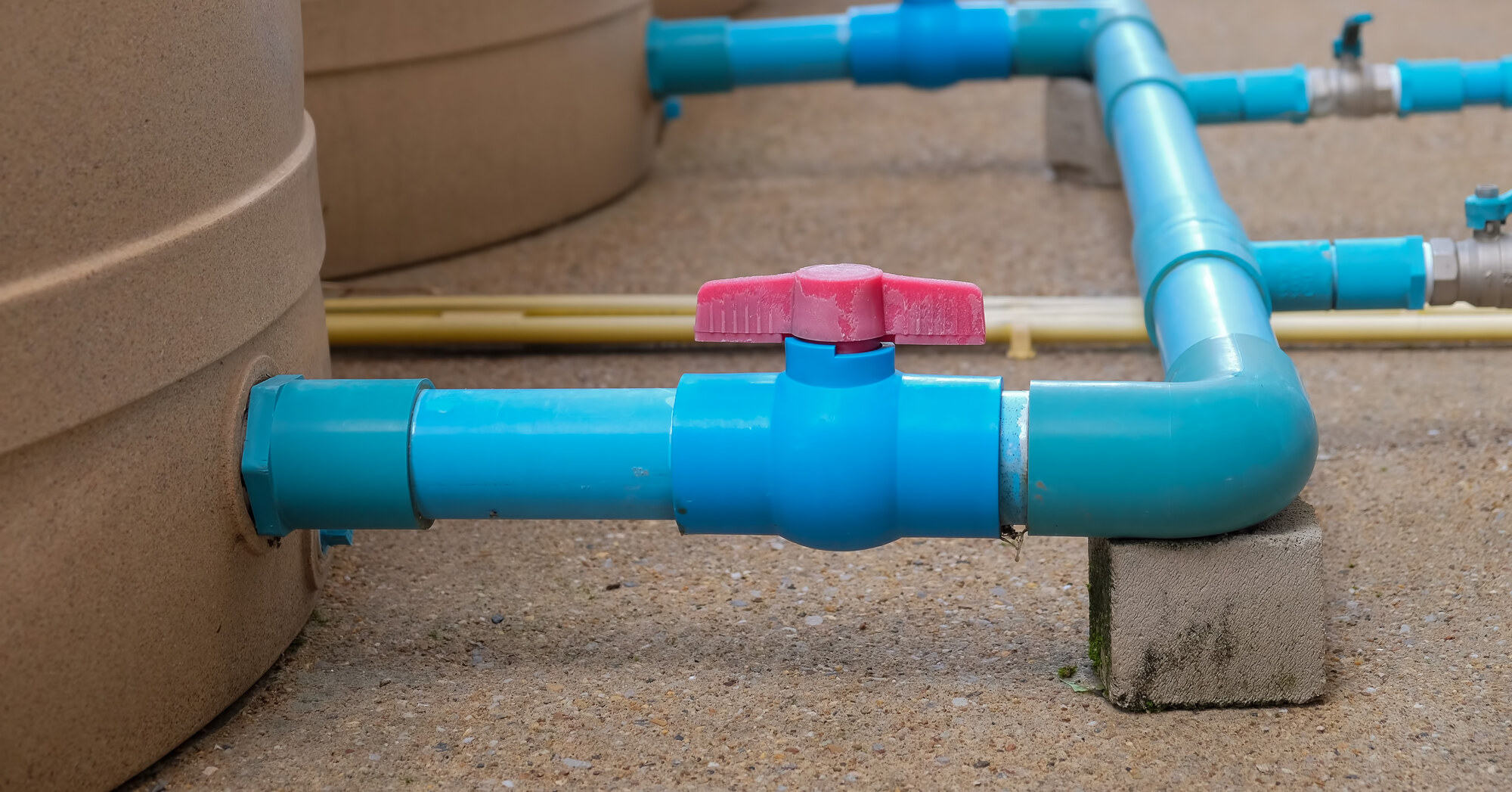
Supplying drinking water to homes is a duty every Spanish municipality carries by law. The local-government act lists, among the services every town must provide, abastecimiento domiciliario de agua potable, alcantarillado, household drinking-water supply and sewerage. On Fuerteventura the six municipalities do not run the water themselves: they pooled the task, with the Cabildo, in the Consorcio de Abastecimiento de Aguas a Fuerteventura, the CAAF, a public consortium whose general board seats the Cabildo's president and vice-president and the mayor, or a delegated councillor, of each of the six towns, and whose service, in its own description, comprises la producción, distribución y suministro de agua a usuarios domésticos, industriales y agropecuarios, the production, distribution and supply of water to domestic, industrial and farming users. Production means desalination: the consortium's plants at Puerto del Rosario, Corralejo and Gran Tarajal turn seawater into drinking water, pump it to regulating tanks on the high ground and let it run down to the villages and resorts. The Puerto del Rosario plant alone has an authorised nominal capacity of 36,500 cubic metres a day, and the main tank system above it, at La Herradura, holds 32,000 cubic metres; the Island Water Council's own certificate calls both básicas y fundamentales en el conjunto de las que definen los servicios del agua en la DH de Fuerteventura, basic and fundamental to the whole water service of the island. Electricity is the cost that dominates every cubic metre, which is why the consortium built a wind farm at Cañada de la Barca in 1990, 10.26 megawatts, to mitigate it.
Above the consortium sits a second body that owners rarely meet but whose decisions shaped the last five years. The Canary water law gives each island a Consejo Insular de Aguas, a public entity attached to the Cabildo, that asume, en régimen de descentralización y participación, la dirección, ordenación, planificación y gestión unitaria de las aguas, takes on the direction, ordering, planning and unified management of the island's waters. It writes the island's hydrological plan, grants the concessions to private desalination plants, polices the water domain and, when supply is at risk, declares the emergency. Sewerage stays with the town halls: it sits on the same list of mandatory municipal services, and the sewer fee, where a town charges one, comes from the ayuntamiento, not from the consortium.
Five emergency years: what happened and where it stands
The law that allows an island to declare a water emergency is short. Article 107 of the Canary water law says that En caso de descenso grave de los caudales disponibles o de las reservas hídricas, producido por circunstancias previsiblemente transitorias, que pongan en peligro la producción y el abastecimiento de agua en una isla o zona, el Consejo Insular, mediante el procedimiento que reglamentariamente se determine, podrá declarar para la totalidad de la isla o parte de ella la situación de emergencia por tiempo determinado, que podrá prorrogarse periódicamente mientras las circunstancias lo exijan: when a serious fall in available flows or reserves, for foreseeably transitory reasons, endangers production and supply, the Island Council may declare an emergency for the whole island or part of it, for a fixed period, renewable while the circumstances last. Once declared, article 108 lets the Council assign water to specific uses and zones, order forced transfers and, if the emergency leads to shortages, imponer restricciones al consumo de agua, impose restrictions on consumption.
Fuerteventura used that article twice. The Island Water Council's board first declared the emergency on 8 January 2020, with twenty-one works on production, distribution and storage, and extended it in September of that year. On 3 March 2023 it declared it again, this time for six months under the island's water-domain regulation, because the pumping main from the Puerto del Rosario plant to the La Herradura tanks, 4,686 metres of pipe serving a population the certificate puts at 74,207, could not carry enough water to guarantee the minimum for sanitary and domestic use. The measures written into that declaration explain what an owner saw that year: water bought from private desalination plants with spare capacity near the grid at Nuevo Horizonte, Caleta de Fuste, Las Playitas and La Lajita, lorries carrying water from the consortium's own plants and tanks to the villages at the ends of the network, and Contratación de un servicio de detección, localización y reparación de fugas de agua en la infraestructura de transporte y distribución del CAAF, a contract to detect, locate and repair leaks in the consortium's mains. The Council's own record lists the villages whose tanks needed lorries in 2023: Tindaya, Vallebrón, Ampuyenta, Gran Barranco, Cardón, Tesejerague, Tarajalejo and La Lajita. The emergency was extended for a year on 1 September 2023 and again on 2 September 2024, the second time, in the consortium's words quoted by the Council, because persiste el riesgo real de desabastecimiento de agua potable por el descenso grave de los caudales disponibles, the real risk of shortage persisted, and with the possibility of ending it early once the enlarged Corralejo plant, the new pumping from La Herradura to Calderetilla and the transport main from Calderetilla to Tiscamanita, the head tank of the south, were in service.
It ended a year later. On 5 September 2025 the Cabildo and the Council announced that Fuerteventura ya no se encuentra en situación de emergencia hídrica, that the island was no longer in a water emergency, with effect from 2 September, after the Council read the consortium's technical reports and ha propuesto no prorrogar la emergencia hídrica en Fuerteventura, proposed not to extend it. The numbers the Cabildo gave that day are the measure of what changed: more than 60 % of the emergency works finished and the rest expected in 2026, an investment above €60 million, the three desalination plants enlarged to la producción récord de casi 50.000 metros cúbicos diarios, lo que supone un incremento de un 66% con respecto a lo que se producía en 2023, a record production of almost 50,000 cubic metres a day, 66 % more than in 2023, new tanks at La Herradura, Tamaragua and Guerime that raised storage by 40 %, renewed networks in Corralejo, Puerto del Rosario, Gran Tarajal and El Cotillo, water bought from third parties cut by 90 %, the consortium's energy bill cut by 70 % and, for the owner who lived through it, supply cuts across the island reduced by more than 80 %. The Cabildo's president closed with a sentence worth keeping: Se acaba la emergencia, pero no el compromiso. The emergency is over; the works are not, and article 107 remains available if the flows fall again.
| Date |
Decision |
What it meant on the ground |
| 8 January 2020 |
First emergency declaration by the Island Water Council's board |
Twenty-one works on production, distribution and storage |
| 25 September 2020 |
First extension, by decree of the Council's presidency |
The pumping main to the La Herradura tanks still to build |
| 3 March 2023 |
Second declaration, for six months |
Water bought from private plants, lorries to eight villages, a leak-detection contract |
| 1 September 2023 |
Extension for one year, decree 115/2023 |
The pumping main still unfinished; the Puerto del Rosario plant improved |
| 2 September 2024 |
Second extension, for one year |
Corralejo plant enlarged; new pumping to Calderetilla and the main to Tiscamanita |
| 2 September 2025 |
The emergency lapses; the Cabildo announces it on 5 September |
Almost 50,000 cubic metres a day, storage up 40 %, cuts down 80 % |
Who the consortium bills: the owner, the occupant and the community
The water charge is a municipal-style tax, a tasa, and its ordinance decides who owes it. Article 10 of the consortium's fiscal ordinance, reproduced in its own procedure forms, names as taxpayer el propietario del inmueble, the owner of the property, and as the taxpayer's substitute el ocupante legal (inquilinos u otros) o usuario del inmueble al que se refiere el suministro, the legal occupant, tenants or others, or the user of the property the supply serves. In plain terms: the property is the anchor of the consortium's file; a tenant who holds the contract pays as the owner's substitute, and the owner is the person the ordinance names first. To open a supply the consortium asks for three things, in its transparency portal's words: Titularidad del inmueble, Formalización de contrato de suministro and the identification of the taxpayer or the substitute.
The consortium bills against a roll it approves month by month. Its notice for November 2022, published in the provincial gazette, is the template every later month follows: the roll is approved by resolution, exposed for fifteen working days, paid in a voluntary period of a month at the collaborating banks, charged to direct-debit accounts in the first days of that period, and, in the notice's words, Transcurrido el plazo de ingreso voluntario sin que se haya satisfecho la deuda se iniciará el período ejecutivo, once the voluntary period passes without payment the enforcement period begins, with the interest and surcharges of the General Tax Act. The consortium's own site points owners with bills in enforcement to an online folder where the debt can be consulted and to a helpline for arrears, a channel separate from the customer offices. An owner who lives abroad has two defences against a bill that arrives while the flat is empty: a SEPA direct-debit order, which the consortium accepts on a simple form, and a representative in Spain, because every consortium procedure allows a representative with proof of authority under the administrative-procedure act. The consortium's electronic office works around the clock, but, as its own site warns, ha de tener en cuenta que para acceder se requiere estar en posesión de un certificado digital válido, bear in mind that a valid digital certificate is required to enter, meaning a certificate from a recognised issuer or the Spanish electronic ID; an owner without either files through the representative or in person at the registers in Puerto del Rosario, Corralejo and Gran Tarajal.
Whether the consortium bills each flat or the community depends on how the building was connected. Newer buildings carry a battery of individual meters at the entrance, one contract per dwelling, and the community's own contract covers the garden, the pool and the cleaning taps. Older blocks and many resort complexes were built with a single general meter: the consortium bills the community as one subscriber for everything that passes the meter, and what happens inside is a matter for the Horizontal Property Act, which is the subject of a later section.
Reading the bill: the consumption blocks, the ordinance and the missing IGIC
The consortium's tariff charges consumption in escalating blocks: the ordinance, in the Cabildo's words when it reformed it, cuantifica por tramos, quantifies by tiers, so that a household that uses a lot pays a higher rate on the last cubic metres than on the first. The blocks exist to punish waste; they also punish a hidden leak, which is why the ordinance was changed in 2022, as the next section explains. Farming water has had its own reduced tariff since the same reform, cut by 16 % for professional farmers and stockbreeders.
What the bill does not carry is Canary sales tax. The consolidated Canary text on the IGIC puts Las aguas aptas para la alimentación humana o animal o para el riego, incluso en estado sólido, water fit for human or animal consumption or for irrigation, even as ice, in the list of goods taxed at the zero rate, so the consortium's invoice shows the tasa and nothing else. The sewer fee, where the town charges one, comes separately from the ayuntamiento. And the tariff amounts themselves live only in the ordinance published in the provincial gazette, which the consortium's portal points to without reproducing; before budgeting a community's water we read the ordinance in force for the year, because the consortium's board can modify it and did so in 2021 and 2022.
One meter or many: how a community splits its water
The Horizontal Property Act starts from the quota. Every flat carries a participation quota, and Dicha cuota servirá de módulo para determinar la participación en las cargas y beneficios por razón de la comunidad, that quota is the module for sharing the community's charges and benefits. Owners must Contribuir, con arreglo a la cuota de participación fijada en el título o a lo especialmente establecido, a los gastos generales para el adecuado sostenimiento del inmueble, sus servicios, cargas y responsabilidades que no sean susceptibles de individualización, contribute, by their quota or by whatever has been specially established, to the general expenses of the building, its services and charges that cannot be individualised. That last clause is the key to water. The garden, the pool, the cleaning of the stairs and the water lost between the general meter and the flats cannot be individualised: they are general expenses, split by quota unless the statutes or a valid agreement say otherwise. The water a family drinks and showers with inside its flat can be individualised the moment there is a sub-meter to read, and then it is not a general expense at all but that owner's own consumption, charged to that owner.
So a community with one general meter has two honest ways to divide the consortium's bill and one dishonest one. It can read sub-meters in every flat and charge each owner the cubic metres they used at the tariff the consortium applied, leaving only the difference, the common uses and the losses, to be shared by quota. It can, where there are no sub-meters, share the whole bill by quota, which the Act allows because nothing can be individualised. What it cannot do is invent a third rule that stays for good without the majority the Act requires. A method adopted year by year with the budget is an ordinary agreement, and bastará el voto de la mayoría del total de los propietarios que, a su vez, representen la mayoría de las cuotas de participación, a majority of owners holding a majority of quotas suffices, or the majority of those present at a second call. A rule written into the statutes, or one that changes the quotas themselves, is another matter: agreements que impliquen la aprobación o modificación de las reglas contenidas en el título constitutivo de la propiedad horizontal o en los estatutos de la comunidad, requerirán para su validez la unanimidad del total de los propietarios que, a su vez, representen el total de las cuotas de participación, need the unanimity of all owners holding all the quotas. Absent owners count for that: an owner duly summoned who does not object within thirty calendar days of being told of the agreement is counted as a vote in favour, a rule that reaches every owner who reads community mail from abroad a month late.
| The water |
Who pays it |
On what basis |
| Consumption inside a flat with a sub-meter |
That owner |
Metres read, at the consortium's tariff; individualised, so not a general expense |
| Consumption inside flats without sub-meters |
All owners |
By quota, as a general expense that cannot be individualised |
| Garden, pool, cleaning, common taps |
All owners |
By quota, or by the rule in the statutes |
| The gap between the general meter and the sum of the sub-meters |
All owners |
By quota; a gap that grows year on year is a leak to find, not a rule to argue |
| A leak in a common pipe, and the water it wasted |
The community |
A general expense; the repair is a mandatory conservation work |
| A leak inside a flat, and the water it wasted |
That owner |
The duty to keep the flat and its private installations in repair |
A few communities we administer keep the one-meter contract and read the sub-meters themselves each period; others have asked the consortium to individualise the contracts, which means a battery of meters, a plumber and the consortium's connection procedure, and ends the argument for good. Either way the reading date matters: a community that reads its sub-meters on a different day from the consortium's meter reading will never reconcile the two, and the gap it shares by quota will look like a leak that is only a calendar.
Leaks before and after the meter: who pays, and the 2022 rule
Where the consortium's responsibility ends and the owner's begins is written in the state drinking-water decree of 2023. It defines the service connection, the acometida, as the pipe linking the building to the public main, and fixes the delivery point at el grifo o racor de prueba del armario o arqueta de contadores tras la llave de corte general en el exterior del edificio, the test tap of the meter cabinet after the general stop valve outside the building. Everything after that point is the internal installation, defined as the set of pipes, connections, tanks, fittings and appliances cuya responsabilidad es del titular o propietario de la instalación y no del operador de la red de distribución, whose responsibility lies with the holder or owner of the installation and not with the operator of the network. The operator, for its part, must guarantee the quality of the water up to the delivery point and, under article 47 of the same decree, evaluate the structural leaks of its own mains and reduce the avoidable ones; the leak-detection contract in the emergency declaration is that duty in practice.
A leak before the meter is the consortium's water and the consortium's cost. A leak after the meter passes through it, is counted and is billed in the blocks, and until 2022 the ordinance had no answer for the owner who came back from a winter abroad to find the bill of a swimming pool. The consortium's board changed that on 24 November 2021, and the modification, published in the provincial gazette, came into force on 1 February 2022; in the Cabildo's words, no se gravará sobre el consumidor el agua contabilizada de más en su contador por motivos de averías accidentales que sean acreditadas, sino que se aplicará la tarifa ordinaria, the water counted in excess by the meter because of proven accidental breakdowns is not charged at the punitive blocks but at the ordinary tariff. The procedure now has its own form in the consortium's electronic office, and its title states the three conditions: AVERÍA FORTUITA, OCULTA Y NO DEBIDA A NEGLIGENCIA DEL USUARIO, a breakdown that is fortuitous, hidden and not due to the user's negligence, under article 16 of the fiscal ordinance. The file needs the Factura de la reparación y/o parte del seguro, the repair invoice or the insurance report, ideally describing the fault, and photographs or reports proving that the fault was accidental and hidden; the consortium adjusts the bill, and if money is refunded it asks for an IBAN. The clock is short: El plazo máximo para solicitar el descuento, será de tres meses desde la fecha del recibo sobre la que solicita el descuento, three months from the date of the bill. An owner abroad who lets the first high bill sit until the next visit has usually lost the right by the time the plumber is called.
Between the meter and the flat, the question is not the consortium's but the community's, and we wrote up who pays for a leak between floors and when the community's insurance steps in in a piece of its own. The short version for water is the same as for damp: a common pipe is the community's, a private pipe is the owner's, and the Act asks each owner to Mantener en buen estado de conservación su propio piso o local e instalaciones privativas, keep the flat and its private installations in good repair, answering for damage caused by neglect. A flat that stands empty for months with the stopcock open is the case we see most; the absence protocol we recommend to owners abroad starts with that tap.
The community's tank: the aljibe, the pump and the decree that names the community
Many buildings on the island, and almost every resort complex, keep a tank, the aljibe, between the consortium's meter and the flats, with a pump group to give pressure and a day or two of reserve for the cuts that the emergency years made familiar. That tank is part of the internal installation, and the 2023 decree is unusually direct about whose it is. Article 40 requires every internal tank, wherever possible, to sit above sewer level, estando siempre tapado y dotado de un sistema de desagüe que permita su vaciado total, limpieza y desinfección, always covered and fitted with a drain that allows complete emptying, cleaning and disinfection; no sewer pipe may run above it or within two metres of it, and a tank in the open air must be protected and thermally insulated. Then it names the person: El propietario del edificio, o en su caso la comunidad de vecinos, the owner of the building or, where there is one, the community of owners, must supply water fit for consumption through the internal installation, keep the installation in good condition vigilando de forma regular la situación de la estructura del depósito interior, elementos de cierre, valvulería, canalizaciones e instalación en general, watching regularly the tank's structure, closures, valves and pipework, and take corrective measures when the water's quality or the installation puts health at risk. And the community must limpiar periódicamente el depósito interior incluyendo desincrustación, desinfección y aclarado, clean the tank periodically, including descaling, disinfection and rinsing, at a frequency judged case by case with the local administration's criteria according to the water's quality and the tank's size, using a professional under the building code and the biocide rules. The decree also wants a sampling tap after the general stop valve in every building, so that a bad result at a kitchen tap can be traced to the network or to the tank.
The legionella decree, which governs cooling towers, spa pools and the like, does not reach a purely residential building: its scope excludes las instalaciones ubicadas en edificios dedicados al uso exclusivo de vivienda, siempre y cuando no afecten al ambiente exterior de estos edificios, installations in buildings used exclusively as housing, provided they do not affect the exterior environment, though the health authority may still order controls where it suspects a risk. A complex that lets flats to tourists, or a mancomunidad whose pool has jets and water features, is not exclusively housing, and its hot- and cold-water systems fall inside the decree's list of installations; we described what the Canary pool decree asks of a community pool and how a resort of several communities shares its pool and gardens in two earlier pieces, and the water tank belongs to the same annual calendar. When a tap in a private flat gives water that fails a test, the decree's answer is gentle: the local administration dará las recomendaciones necesarias a los propietarios, gives the owners the necessary recommendations; when the fault is in a building with public or commercial activity, the decree puts the corrective measures on the building's owner and, where the health authority says so, the duty to tell the users.
Lorries, cisterns and the houses beyond the network
Not every property on the island has a pipe. Country houses in the interior and some of the older urbanisations fill an aljibe from a water lorry, either their own supplier or the consortium's cisterns, and the 2023 decree regulates that too. An operator may use cisterns or mobile tanks como máximo durante cuatro meses al año, for at most four months a year, and beyond that only after telling the health authority and obtaining its favourable report; the cistern must be marked as drinking-water transport, each load must come with a recent analysis of the water it carries, and while it serves it may carry nothing else. The emergency years turned this exception into a routine in the villages the Council listed, and the decree's four-month rule is one reason the Council could not simply keep sending lorries. An owner buying a house that depends on deliveries should read the tank the way the community reads its aljibe, and budget the lorry at market prices, because the consortium's tariff covers water at the meter, not water at the gate.
Saving water: what the law can impose, and what a community can do before it does
Article 108 gives the Island Council, in an emergency that leads to shortages, the power to restrict consumption, and the 2023 drinking-water decree fixes a floor of 100 litres per inhabitant and day, more where the island's hydrological plan says so; the 2024 extension recites that the levels in the main tanks were muy inferior al nivel de garantía de demanda, well below the guarantee level the island's plan sets. No restriction on households was in force when the emergency ended, and none is in force as we write, but a community that waited for one would be planning for the wrong year. What cuts a community's water bill is unglamorous: a cover on the pool and a pump schedule that does not backwash daily, garden species that survive the island's wind without a sprinkler at noon, a quarterly reading of every sub-meter with the general meter on the same morning, and an administrator who looks at the consumption curve every month and phones the owner whose empty flat suddenly drinks 40 cubic metres. The consortium's reform of 2022 rewards the last habit, because a leak found in the first month is a small bill corrected within the three months; a leak found in the third is a bill with no remedy.
What we do in the communities we administer
For the communities we manage in Corralejo, Caleta de Fuste and the south, water is a line we watch rather than a bill we forward. We hold the consortium's contract and direct debit in the community's name, read the sub-meters on the consortium's reading day where the building has them, and present the split at the annual meeting with the general meter, the sum of the flats and the gap side by side, so that the gap is discussed as a leak or as a garden and not as a mystery. We keep the tank's cleaning certificate in the community's file and put the next date in the calendar, and we file the article 16 claim for an owner whose flat had a hidden leak within the three months, with the plumber's invoice and the photographs the consortium asks for. Owners abroad who want that done for their building can read what our community administration covers and ask for a quote with the number of dwellings and the way the building is metered.
Common questions
My flat was empty all winter and the consortium's bill is enormous. What do I do?
Assume a leak after the meter, close the general stopcock if anyone can reach it, and get a plumber in this week, because the consortium's correction under article 16 of its ordinance has to be requested within three months of the date of the bill and needs the repair invoice or the insurance report plus photographs or a report showing that the fault was accidental and hidden. If the conditions are met the excess is charged at the ordinary tariff instead of the higher blocks; if you miss the three months there is no correction. Remember that the ordinance names the owner as taxpayer even when a tenant holds the contract.
I am never there. Can the community charge me water by quota?
If the building has one general meter and no sub-meters, yes: consumption that cannot be individualised is a general expense and the Horizontal Property Act shares it by quota unless the statutes provide otherwise. If your flat has a sub-meter, your own consumption is individualisable and should be charged to you by the metres read, with only the common uses and the losses shared by quota. Ask the administrator for the general reading, the sum of the sub-meters and the gap; a method adopted with the budget needs an ordinary majority; a permanent rule in the statutes needs unanimity, and for that kind of agreement your silence for thirty days after being told of it counts as a vote in favour.
Is the emergency over, or will there be cuts this winter?
The Island Water Council let the emergency lapse on 2 September 2025 after the consortium reported record production of almost 50,000 cubic metres a day, new tanks and an 80 % fall in cuts, and the Cabildo said the remaining emergency works would be finished in 2026. Cuts are no longer general, but a burst main or a plant stoppage can still empty a village tank for a day, which is why a community's aljibe and pump group are worth their maintenance. Article 107 of the Canary water law lets the Council declare a new emergency if the flows fall again.
Who has to clean the community's water tank, and how often?
The community, by name: the 2023 drinking-water decree makes the owner of the building or the community of owners responsible for keeping the internal installation in good condition and for cleaning the tank periodically, with descaling, disinfection and rinsing, through a qualified professional, at a frequency set case by case with the town hall's criteria according to the water and the tank. The legionella rules add nothing for a building used only as housing, but a complex with tourist lets or a pool with water features falls within them and its water systems need the legionella plan as well.