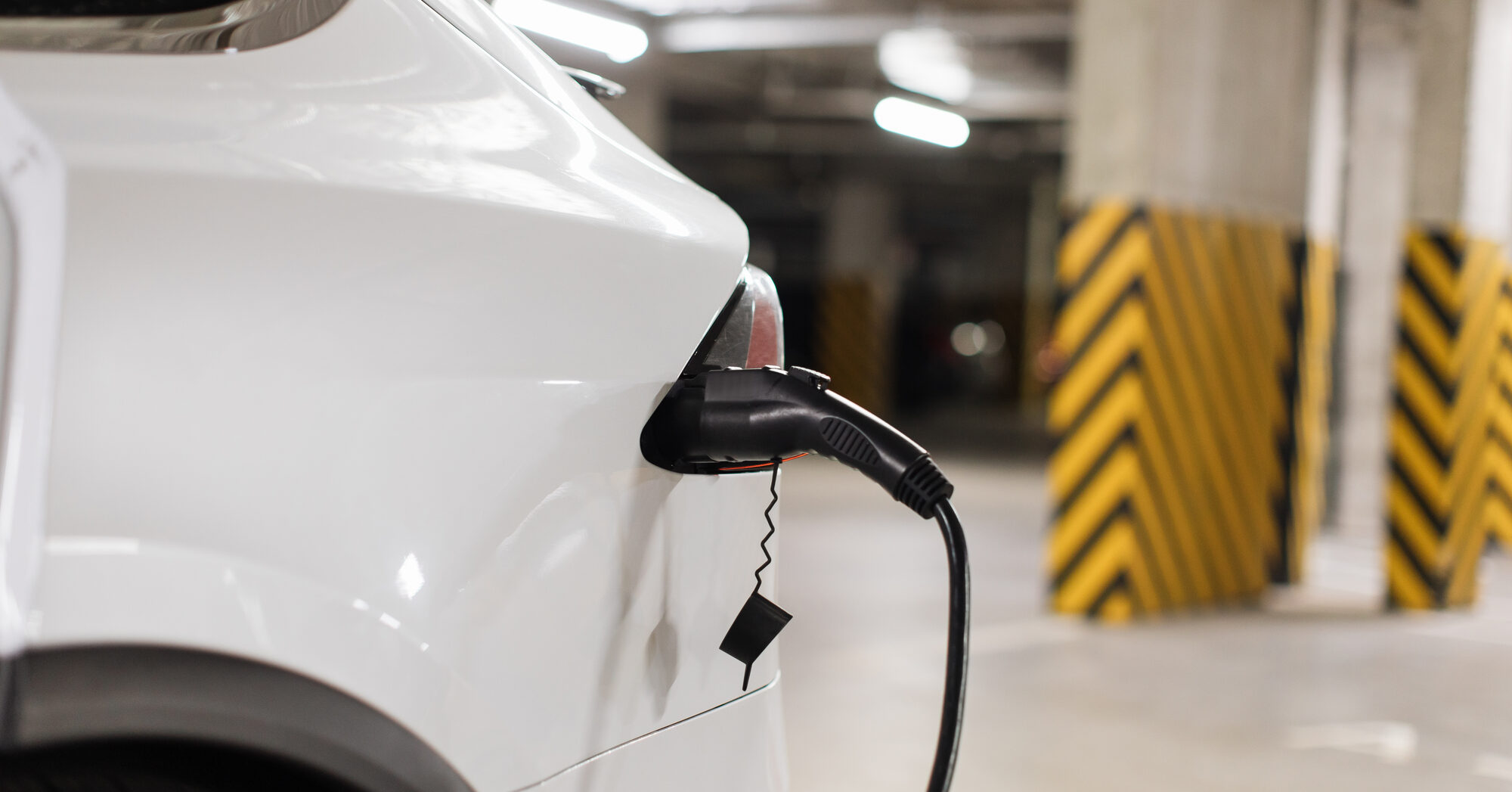
The new car arrives in Corralejo before the cable does. The owner has a numbered space in the community garage, a wallbox in a box and a message from a neighbour saying that «the community will have to vote on it». It will not. The Ley de Propiedad Horizontal gives a private charging point on your own space one of the lightest procedures in the whole Act, the Supreme Court closed the last argument about it in December 2025, and the electrical code tells the installer exactly how to wire it. This is how we handle it in the communities we administer — and where the garage does become a community matter.
The individual right: notice, not permission
«The installation of a charging point for electric vehicles for private use in the building's car park, provided it is located on an individual garage space, shall only require prior notice to the community. The cost of the installation and the corresponding electricity consumption shall be borne entirely by the person or persons directly interested in it» (Ley de Propiedad Horizontal, art. 17.5). Three conditions and one consequence: private use, an individual space, notice before the works — and every euro on you.
Notice is not a request. The junta does not vote on it, the president does not sign it, and the Act sets no form or content for it. The Supreme Court settled the last dispute in its judgment of 1 December 2025 (STS 1745/2025): a community had refused because the cable would cross the garage ceiling, a common element, and its junta later voted to have the charger removed. The Court annulled that resolution. Article 17.5 does not distinguish whether the installation touches common elements or not; the legislator deliberately chose the lightest procedure to help electric mobility along; running the cable through the ceiling, the walls or the trays of the garage needs no authorisation. The only limit the Court kept is the one common sense keeps: an «unnecessary or disproportionate» impact on common elements, or a real harm to the other owners, can still be challenged. Choose the shortest sensible route and there is nothing to challenge.
What the community may legitimately ask — and what we ask in the communities we administer — is that the work be done by an authorised low-voltage installer, that it follow the electrical code, that the installer's certificate be filed with the Canary Government's industry service and a copy handed to the administrator, that the route and fixings in the common areas be agreed with the administrator beforehand, and that the owner's insurer know about the new installation. None of that is a condition of the right; it is the paperwork that protects everyone, the owner first.
Send the notice in writing to the president or the administrator — our president piece explains who does what — before the installer arrives, with the space number, the installer's name, the wiring scheme and the intended route. A week is a courteous margin; the Act sets none.
How it is wired: the four schemes of the electrical code
Since the 2014 regulation on charging infrastructure (Real Decreto 1053/2014, instruction ITC-BT-52 of the low-voltage code), the installer must prepare a technical memorandum or a project before starting, and it must state which of four connection schemes is used:
- A collective trunk line with one main meter at the origin, from which each space hangs — the community's scheme, for garages that equip themselves for everyone.
- An individual line sharing your home's meter — your flat's supply feeds the charger, usually the cheapest route when the meter room is close to your space.
- An individual line with its own meter for the charging point — a separate supply contract for the garage, which leaves your home's contracted power untouched.
- An additional circuit for charging from an existing installation — the single-family and townhouse case.
Whichever scheme, the code also fixes what the building must be able to carry: the load forecast for a collective car park counts 3,680 W for every 10 % of the spaces, which is why an older garage in Caleta de Fuste may need its main line or its meter room looked at before the fifth or sixth charger goes in — and why a community that expects many chargers does better with a trunk line than with six individual cables competing for the same trays. New buildings whose project was filed after the regulation came into force must be born with the pre-installation: cable conduits from the meter room along the main aisles, reaching every space when the design covers all of them.
Who pays what
For the individual point the Act is blunt: installation and consumption are yours. Under scheme 2 the electricity runs through your own meter; under scheme 3 you sign a supply contract for the garage and pay it directly; under a community trunk line the secondary meter at your space measures what you owe, and the community bills it back to you without margin. What is never yours alone is the common infrastructure the community decides to build for everyone — and that is the next case.
When the garage becomes a community matter
Three situations take the charger out of article 17.5 and into a vote.
A shared car park without individual spaces. The right belongs to the owner of an individual space. Where the community's parking is an open area used in turn, or spaces are allocated by the junta rather than owned or annexed to a home, a charging point is a community decision on the use of a common element, not an individual right — and in Fuerteventura that is the case in more than a few complexes.
A common pre-installation. A trunk line, the trays down every aisle, a main meter and the room to house it, so that any owner can plug a charger in later at a fraction of the cost: this is an innovation not required for the conservation of the building, and the reading most administrators apply is article 17.4 — three-fifths of the owners and of the quotas. Two consequences follow. If the cost per owner exceeds three ordinary monthly fees, an owner who voted against is not obliged to pay and keeps the right to join later by paying their share updated with legal interest (art. 17.4). And the dissenter's quota does not change. Some read the collective-supply rule of article 17.1 — one third of owners and quotas, with the cost falling only on those who voted in favour — as applicable to charging trunk lines; we take the project to the junta as a three-fifths resolution, which holds under either reading, and we say so in the convocatoria. Our fees-and-derramas piece explains how the share is then collected.
A renewable project. A solar canopy over the car park feeding the chargers is a renewable installation of common use, and the Act treats those differently: a simple majority suffices when the annual cost per owner, after grants, stays within twelve ordinary monthly fees, and then everyone pays (art. 17.2). The junta's agenda item must say which rule it is voting under; our AGM piece for owners abroad covers the notice, the proxy and the vote from a distance.
Grants, this year
The Canary Government's MOVES III 2025 call — which funded private chargers in residential buildings and the pre-installation in communities of owners — closed to new applications on 31 December 2025 and is open only for the follow-up of grants already awarded. At the time of writing, September 2026, no new call for charging points is open in the islands. Ask before you install, not after: grants are for works not yet started, and our works-and-grants service tracks the calls as they open.
The Fuerteventura details
Salt air corrodes: a wallbox on an open car park in Corralejo or Costa Calma wants an outdoor-rated, sealed unit and stainless fixings, and the community's trays want a look before a cable is laid in them. A charger on the wall of an underground garage in Caleta de Fuste needs neither. Where a complex runs on a master community or a mancomunidad, the notice goes to the community that owns the car park, not to the sub-community of your block. And an owner abroad does none of this in person: the notice, the installer, the certificate and the insurer's letter are exactly the errands an administrator runs.
Where we come in
Our administrators in Fuerteventura receive the notice, agree the route through the common areas, file the installer's certificate in the community's records and — when several owners want chargers — put a trunk-line project to the junta with the right majority and the grant calls in view. See our community maintenance service, or ask for a quote.
Common questions
Can my community refuse my charging point?
Not if it is for your private use and sits on your own individual space: article 17.5 asks only for prior notice, and the Supreme Court confirmed in December 2025 that a cable through common elements changes nothing. The community can still object to a route that damages common elements unnecessarily or harms other owners — which a sensible route never does.
What should the notice say?
The Act sets no form or content. In practice: your space, the installer, the wiring scheme and the route through the common areas, sent in writing to the president or the administrator before the works. Hand over the installer's certificate afterwards for the community's file.
Who pays for the electricity?
You do, in full. Either through your own home's meter, through a separate supply contract for the garage, or through the secondary meter of a community trunk line, which the community bills back to you.
We want chargers for the whole garage. What majority do we need?
A common pre-installation is an innovation under article 17.4: three-fifths of owners and quotas, and dissenters need not pay if their share exceeds three ordinary monthly fees. A solar installation feeding the chargers falls under the simple-majority rule of article 17.2 when the annual cost after grants stays within twelve monthly fees.